Sponsored
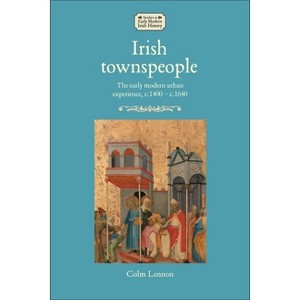
Irish Townspeople - (Studies in Early Modern Irish History) by Colm Lennon (Hardcover)
Pre-order
Sponsored
About this item
Highlights
- Through a series of innovative perspectives, this book examines how early modern Irish townspeople experienced the urban world through a range of family and associational ties.
- About the Author: Colm Lennon is Emeritus Professor of History at Maynooth University
- 336 Pages
- History, Europe
- Series Name: Studies in Early Modern Irish History
Description
About the Book
A work of Irish urban history that studies the society and culture of townspeople, including their integration as citizens, their membership of fraternities, guilds and parishes and their charity. As civic leaders they forged political and confessional identities that set them at odds with church and state in mid-seventeenth century Ireland.
Book Synopsis
Through a series of innovative perspectives, this book examines how early modern Irish townspeople experienced the urban world through a range of family and associational ties. Migrants inducted through town citizenship and marriage bonded more closely as sisters or brothers of confraternities and guilds, consolidating parish membership. Civic religion saw the integration of religion with town politics and councils, and monastic charity of the friars' hospitals preceded the era of modern municipal welfare. In circumstances of the alienation of the long-settled Catholic townspeople from the state's religious and political Reformation in the seventeenth century, they drew sustenance from the continuity of institutions such as colleges, fraternities and hospitals and forms of coexistence with Protestant fellow-citizens.
From the Back Cover
This ground-breaking work of social history examines the culture and lived experience of Irish townspeople during an extended period of profound change. Spanning the years c.1400-c.1640, it explores how Irish towns and cities recovered from the crisis of the Black Death to become a potent force during the early modern period.
The book explores how urban communities built strong institutions and communities and fostered a lively associational culture comparable to that found in Renaissance Europe. Through their civic rulers, the secular and religious spheres of the towns were increasingly fused, creating a pronounced corporativeness in guild, fraternity, parish and neighbourhood. This informed the towns' resistance to the religious and political reforms of the centralising English state following the Reformation and its aftermath.
Ranging extensively in time and place, the book considers how Irish townspeople drew upon strong communal bonds and sensitivity to the urban past to foster inclusiveness of ethnicity, gender and the urban poor.
About the Author
Colm Lennon is Emeritus Professor of History at Maynooth University
Shipping details
Return details
Trending Non-Fiction



Discover more options