Sponsored
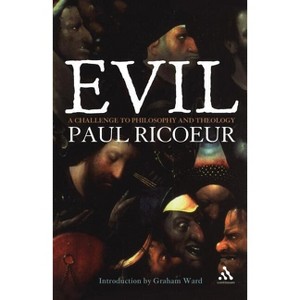
Evil - by Paul Ricoeur (Paperback)
In Stock
Sponsored
About this item
Highlights
- Where does evil come from?
- About the Author: Paul Ricoeur was a leading French thinker best known for combining phenomenological description with hermeneutic interpretation.
- 80 Pages
- Religion + Beliefs, Theology
Description
About the Book
Evil: A challenge to Philosophy and Theology is written by Paul Ricoeur, a French philosopher of international repute and influence. He became interested in phenomenology and because of the problem of evil, became immersed in hermeneutics and symbolism.
Book Synopsis
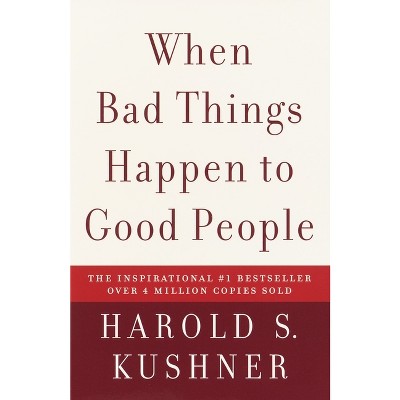
Where does evil come from? How is it that we do evil? This book falls into three parts. The first part deals with the magnitude and complexity of the problem of evil from a phenomenological perspective. The second part investigates the levels of speculation on the origin and nature of evil. The third discusses thinking, acting and feeling in connection with evil. The discussion runs in the classic intellectual tradition from Augustine, through Hegel, Leibnitz, Kant, and Nietzsche. But the voice is always that of Paul Ricoeur himself, though he also refers to modern writers like Harold Kushner (When Bad Things Happen to Good People) and John K. Roth (Encountering Evil). Ricoeur considers here man's vulnerability to evil with depth and matchless sensitivity.
Review Quotes
"Offers rich philosophical resources for theological reflection." --Brian Gregor, Heythrop Journal
"One of the most important achievements of Catani's work is to demonstrate that literature, as a discourse of knowledge that can intersect with science, theology, politics, and history, deserves to play a decisive role in deepening and complexifying the terms of public debate." --Ian James, University of Cambridge, UK, French Studies
"Evil: A History in Modern French Literature and Thought offers a rich study of French thought on evil in its development over almost two centuries. Catani succeeds in the ambitious task of placing in dialogue with one another upwards of forty key thinkers in order to establish a series of significant shifts in understanding evil that will greatly benefit scholars of intellectual history." --Scott M. Powers, University of Mary Washington, H-France Review
"With engaging prose, Damian Catani pays close attention to linguistic choices- his own and those of the authors he studies, as they attempt to find and forge a language capable of representing evil. Other strengths include Catani's mastery of a broad corpus of literary and theoretical works, as well as Evil's compelling overarching narrative, which propels the reader forward and regularly underscores connections among chapters and disparate authors and periods. This valuable contribution to the field will appeal to scholars of intellectual history and modern French literature, in addition to readers interested in the public debate surrounding recent (counter)terrorist actions and rhetoric." --Erin Tremblay Ponnou- Delaffon, Illinois State University, French Forum
About the Author
Paul Ricoeur was a leading French thinker best known for combining phenomenological description with hermeneutic interpretation. His first major work was "Philosophy of Will" published in the UK in 1980. Other translated works include "The Symbolization of Evil" and T"he Conflict of Interpretations." Born in 1913 he was a professor at Nanterre and Strasbourg. In 2004, he was awarded the second John W. Kluge Prize for Lifetime Achievement in the Human Sciences (shared with Jaroslav Pelikan). Ricoeur died in 2005.