Sponsored
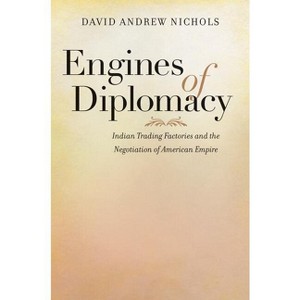
Engines of Diplomacy - by David Andrew Nichols Hardcover
In Stock
Sponsored
About this item
Highlights
- As a fledgling republic, the United States implemented a series of trading outposts to engage indigenous peoples and to expand American interests west of the Appalachian Mountains.
- Author(s): David Andrew Nichols
- 270 Pages
- History, United States
Description
About the Book
"As a fledgling republic, the United States implemented a series of trading outposts to engage indigenous peoples and to expand American interests west of the Appalachian Mountains. Under the authority of the executive branch, this Indian factory system was designed to strengthen economic ties between Indian nations and the United States, while eliminating competition from unscrupulous fur traders. In this detailed history of the Indian factory system, David Andrew Nichols demonstrates how Native Americans and U.S. government authorities sought to exert their power in the trading posts by using them as sites for commerce, political maneuvering, and diplomatic action"--
Book Synopsis
As a fledgling republic, the United States implemented a series of trading outposts to engage indigenous peoples and to expand American interests west of the Appalachian Mountains. Under the authority of the executive branch, this Indian factory system was designed to strengthen economic ties between Indian nations and the United States, while eliminating competition from unscrupulous fur traders. In this detailed history of the Indian factory system, David Andrew Nichols demonstrates how Native Americans and U.S. government authorities sought to exert their power in the trading posts by using them as sites for commerce, political maneuvering, and diplomatic action.
Using the factory system as a lens through which to study the material, political, and economic lives of Indian peoples, Nichols also sheds new light on the complexities of trade and diplomacy between whites and Native Americans. Though the system ultimately disintegrated following the War of 1812 and the Panic of 1819, Nichols shows that these factories nonetheless served as important centers of economic and political authority for an expanding inland empire.
Review Quotes
"Invaluable for those working on federal Indian policy in the early American republic for decades to come."--H-Net
"Lively prose and deft integration of economic, political, military, and Native histories into a smart, compelling story--something he makes look far easier than it undoubtedly was."Register of the Kentucky Historical Society
"Nichols has done a terrific job at shedding new light on the complexities of trade and diplomacy between whites and Native Americans. Although the system ultimately disintegrated following the economic turmoil stemming from the Panic of 1819, Nichols's detailed history of the Indian factory system demonstrates how native nations and American newcomers exerted their influence at the trading posts, using the sites for diplomatic, political, and commercial maneuvering, and he has made an important contribution to the field."--Journal of the Early Republic
Shipping details
Return details
Frequently bought together






Trending Non-Fiction






Discover more options