Sponsored
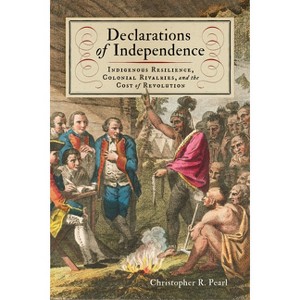
Declarations of Independence - (The Revolutionary Age) by Christopher R Pearl (Paperback)
In Stock
Sponsored
About this item
Highlights
- How Indigenous Americans and colonial settlers negotiated the meaning of independence in the Revolutionary era On July 4, 1776, two hundred miles northwest of Philadelphia, on Indigenous land along the West Branch of the Susquehanna River, a group of colonial squatters declared their independence.
- About the Author: Christopher R. Pearl is Associate Professor of History at Lycoming College and the author of Conceived in Crisis: The Revolutionary Creation of an American State.
- 360 Pages
- History, United States
- Series Name: The Revolutionary Age
Description
About the Book
"On the cusp of the American Revolution, various groups in the Northern Susquehanna River Valley competed for land and political sovereignty, and the increasing turmoil between them set the terms of and ultimately shaped the meaning of the revolution to come. This book weaves the stories of the Susquehanna Nations, a confederation of nearly a dozen refugee Indigenous Nations that came together in the 1750s, and the Fair Play Squatter Republic, which formed outside colonial jurisdiction in the 1770s by unruly settlers trespassing on Native lands, into a riveting tale of declarations of independence won and lost. In so doing, historian Christopher Pearl highlights the complicated racial violence that suffused the Revolutionary Age and establishes the centrality of Indigenous peoples to the founding of the United States"--
Book Synopsis
How Indigenous Americans and colonial settlers negotiated the meaning of independence in the Revolutionary era
On July 4, 1776, two hundred miles northwest of Philadelphia, on Indigenous land along the West Branch of the Susquehanna River, a group of colonial squatters declared their independence. They were not alone in their efforts. This bold symbolic gesture was just a small part of a much broader and longer struggle in the Northern Susquehanna River Valley, where diverse peoples, especially Indigenous nations, fought tenaciously to safeguard their lands, sovereignty, and survival.
This book immerses readers in that intense, decades-long struggle. By intertwining the experiences of Indigenous Americans, rebellious colonial squatters, opportunistic land speculators, and imperial government agents, Christopher Pearl reveals how conflicts within and between them all set the terms and ultimately shaped the meaning of the American Revolution. In the crucible of this conflict, memories, histories, and animosities collided and converged with tremendous consequences. Declarations of Independence delves into the racial violence over land and sovereignty that suffused the Revolutionary Age and helps restore Indigenous peoples to their central position at the founding of the United States.
Review Quotes
An important, multifaceted historical work. Pearl is neither dismissive of Indigenous struggles, nor scathing in his assessment of squatters' motives for encroaching on the former's lands. Rather, he offers a holistic understanding of human beings who found themselves in precarious situations and devised varying logics and strategies to survive.
--North Carolina Historical ReviewReveals the pluralization of the United States' supposedly singular founding moment.
--Early American LiteratureAbout the Author
Christopher R. Pearl is Associate Professor of History at Lycoming College and the author of Conceived in Crisis: The Revolutionary Creation of an American State.
Shipping details
Return details
Frequently bought together



Trending Non-Fiction




Discover more options