Sponsored
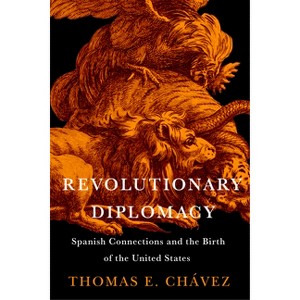
In Stock
Sponsored
About this item
Highlights
- Uncovering the decisive role of Spanish diplomacy in securing American independence Without Spanish assistance, the thirteen American colonies could not have achieved their independence from the British crown.
- About the Author: Thomas E. Chávez is the former director of the National Hispanic Cultural Center, Albuquerque, the author of more than a dozen books, and a Corresponding Member of Spain's Real Academia de la Historia.
- 186 Pages
- History, United States
- Series Name: The Revolutionary Age
Description
About the Book
"Using Benjamin Franklin as his guiding figure, Thomas Châavez details the exchanges, successes, and failures of America's first diplomatic contacts with Spain and the Spanish world during the Revolutionary War. Scholars have only recently begun to scrutinize and fully appreciate Spain's crucial aid to the thirteen rebelling colonies; aid that helped guarantee the nascent United States' independence. Aside from covering Franklin's diplomatic forays, he also introduces readers to Franklin's fellow America envoys Silas Deane, Arthur Lee, John Jay, and Robert Morris, and recounts their interactions with the Count of Vergennes, the Count of Aranda, and the Count of Floridablanca at the Spanish court. As Châavez shows, the diplomatic exchanges between the Continental Congress and the Spanish king, through these intermediaries, expanded a thirteen-colony rebellion into a world war"-- Provided by publisher.
Book Synopsis
Uncovering the decisive role of Spanish diplomacy in securing American independence
Without Spanish assistance, the thirteen American colonies could not have achieved their independence from the British crown. Alongside the more widely known contributions of France, Spanish men, material, and--most important--diplomatic muscle played a decisive role in the American Revolution.
Using Benjamin Franklin as a guide through the European halls of power, celebrated scholar Thomas Chávez details the tense exchanges, successes, and failures of America's crucial collaboration with Spain during our War for Independence. The Spanish were responsible for driving the British from west Florida, and cities such as Galveston, Texas (named for Bernardo de Gálvez), still testify to the depths of Americans' gratitude.
Chávez also introduces readers to Franklin's fellow American envoys Silas Deane, Arthur Lee, John Jay, and Robert Morris, recounting their dramatic negotiations with the Count of Vergennes, the Count of Aranda, and the Count of Floridablanca at the Spanish court. As Chávez shows, the diplomatic exchanges between the Continental Congress and the Spanish king, made through these pivotal intermediaries, expanded a colonial rebellion into a world war.
Review Quotes
For anyone--including students--who does not yet know the vital role that Spain played in the American Revolution, Chávez's book offers an excellent overview. For anyone who thinks they already do, there is still much to learn here about the ins and outs of Spanish involvement in the birth of the United States. Although Chávez is primarily concerned with the Spanish, Revolutionary Diplomacy is an important addition to a growing list of titles concerned with the revolution's global reach.
--William and Mary QuarterlyAbout the Author
Thomas E. Chávez is the former director of the National Hispanic Cultural Center, Albuquerque, the author of more than a dozen books, and a Corresponding Member of Spain's Real Academia de la Historia.
Shipping details
Return details
Frequently bought together



Trending Non-Fiction



Discover more options