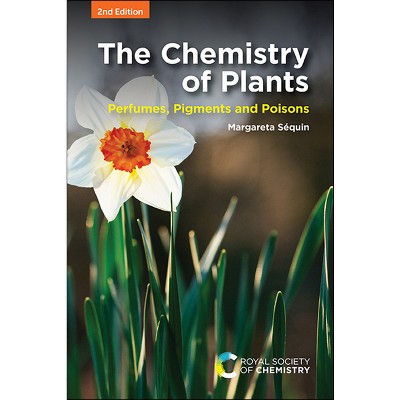
Have you ever wondered how plants attract certain insects, or how insects communicate with each other?
About the Author: Margareta Séquin has a PhD in organic chemistry, with emphasis on natural products, from the University of Basel, Switzerland.
186 Pages
Science, Chemistry
Description
About the Book
This book explains the natural chemical compounds that determine the fascinating interactions between plants and insects providing a gentle and absorbing introduction to organic chemistry.
Book Synopsis
Have you ever wondered how plants attract certain insects, or how insects communicate with each other? This book explains the natural chemical compounds that determine the fascinating interactions between plants and insects providing a gentle and absorbing introduction to organic chemistry that is highly relevant to everyday life and to the natural world. Specific organic compounds and intriguing chemistry determine whether insects are keen on feeding on plants or avoid certain plants altogether. Some insects have learned to use plant compounds as their own defences, and some plants use digestive processes to use insects as nutritional supplements. Plant-insect interactions are vital for our food supply, for pollination of orchards or detrimentally in insect infestations of crops, as well as in applications like silk production. By the author of the popular book, The Chemistry of Plants: Perfumes, Pigments, and Poisons, this book benefits from Margareta Séquin's vast experience leading field trips and seminars to botanical gardens and nature reserves, and teaching chemistry to beginners. Organic chemistry is often seen as a challenging, sometimes abstract field. This book makes chemistry exciting and accessible for readers interested in a deeper understanding of the natural world. The book is organized according to the increasing complexity of compounds introduced, and so it also serves as a useful teaching aid for undergraduate chemistry or biology courses, and as a supplementary text for students in plant sciences, ecology, and entomology, and in horticultural programs.
From the Back Cover
Have you ever wondered how plants attract certain insects, or how insects communicate with each other? This book explains the natural chemical compounds that determine the fascinating interactions between plants and insects providing a gentle and absorbing introduction to organic chemistry that is highly relevant to everyday life and to the natural world.
Specific organic compounds and intriguing chemistry determine whether insects are keen on feeding on plants or avoid certain plants altogether. Some insects have learned to use plant compounds as their own defences, and some plants use digestive processes to use insects as nutritional supplements. Plant-insect interactions are vital for our food supply, for pollination of orchards or detrimentally in insect infestations of crops, as well as in applications like silk production.
By the author of the popular book, The Chemistry of Plants: Perfumes, Pigments, and Poisons, this book benefits from Margareta Séquin's vast experience leading field trips and seminars to botanical gardens and nature reserves, and teaching chemistry to beginners.
Organic chemistry is often seen as a challenging, sometimes abstract field. This book makes chemistry exciting and accessible for readers interested in a deeper understanding of the natural world. The book is organized according to the increasing complexity of compounds introduced, and so it also serves as a useful teaching aid for undergraduate chemistry or biology courses, and as a supplementary text for students in plant sciences, ecology, and entomology, and in horticultural programs.
Review Quotes
This fluently written book is illustrated by well-chosen colour photos and numerous chemical formulae as well as some tabulation of data such as one showing the composition of the synthetic medium used to feed pea aphids. This involves having a detailed knowledge of insects' dietary needs, which are surprisingly complex. I found it interesting to read that the reason that pheromones have odd numbers of carbon atoms in each molecule is because of the mechanism by which insects synthesise them. After reading this book one comes away with the feeling that there is a lot more to be learned from this topic, particularly by those who would like to move away from using environmentally unfriendly sprays in favour of more targeted approaches.
Margareta Séquin has a PhD in organic chemistry, with emphasis on natural products, from the University of Basel, Switzerland. After postdoctoral work at Princeton University she has taught organic chemistry, natural products chemistry, and chemistry for non-majors at San Francisco State University for more than twenty years. She leads field seminars at botanical gardens and in nature preserves. As a plant enthusiast with great interest in the insect world as well she has been a docent at the Regional Parks Botanic Garden in Berkeley, California, for the last twenty years. Extensive travelling allows her to observe and photograph many natural habitats. Margareta Séquin is the author of the book "The Chemistry of Plants: Perfumes, Pigments, and Poisons", published by the Royal Society of Chemistry in 2012.
Dimensions (Overall): 9.2 Inches (H) x 6.2 Inches (W) x .4 Inches (D)
Weight: .7 Pounds
Suggested Age: 22 Years and Up
Number of Pages: 186
Genre: Science
Sub-Genre: Chemistry
Publisher: Royal Society of Chemistry
Theme: Organic
Format: Paperback
Author: Margareta Séquin
Language: English
Street Date: April 28, 2017
TCIN: 1008780589
UPC: 9781782624486
Item Number (DPCI): 247-22-9199
Origin: Made in the USA or Imported
If the item details aren’t accurate or complete, we want to know about it.
Shipping details
Estimated ship dimensions: 0.4 inches length x 6.2 inches width x 9.2 inches height
Estimated ship weight: 0.7 pounds
We regret that this item cannot be shipped to PO Boxes.
This item cannot be shipped to the following locations: American Samoa (see also separate entry under AS), Guam (see also separate entry under GU), Northern Mariana Islands, Puerto Rico (see also separate entry under PR), United States Minor Outlying Islands, Virgin Islands, U.S., APO/FPO
Return details
This item can be returned to any Target store or Target.com.
This item must be returned within 90 days of the date it was purchased in store, shipped, delivered by a Shipt shopper, or made ready for pickup.