Sponsored
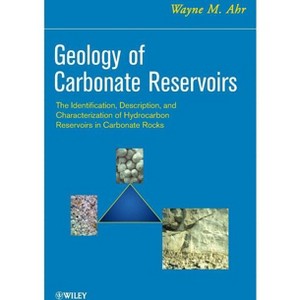
Carbonate Reservoirs - by Wayne M Ahr Hardcover
In Stock
Sponsored
About this item
Highlights
- An accessible resource, covering the fundamentals of carbonate reservoir engineering Includes discussions on how, where and why carbonate are formed, plus reviews of basic sedimentological and stratigraphic principles to explain carbonate platform characteristics and stratigraphic relationships Offers a new, genetic classification of carbonate porosity that is especially useful in predicting spatial distribution of pore networks.
- About the Author: Wayne M. Ahr, PhD, is a professor in the Department of Geology and Geophysics with a joint appointment in the Department of Petroleum Engineering at Texas A&M University.
- 296 Pages
- Nature, Natural Resources
Description
Book Synopsis
- An accessible resource, covering the fundamentals of carbonate reservoir engineering
- Includes discussions on how, where and why carbonate are formed, plus reviews of basic sedimentological and stratigraphic principles to explain carbonate platform characteristics and stratigraphic relationships
- Offers a new, genetic classification of carbonate porosity that is especially useful in predicting spatial distribution of pore networks.
From the Back Cover
A new way of characterizing hydrocarbon reservoirs in carbonate rocks that facilitates their exploration and development
This timely reference presents the information scientists need to explore and develop carbonate reservoirs in the most efficient and profitable ways. Carbonate rocks contain at least half of the world's oil and gas and much of its groundwater. Primary extraction of oil recovers about one-third of it; two-thirds waits for specialized recovery methods that depend on precise knowledge of reservoir geology. Covering everything from the basics to more sophisticated ways of assessing reservoirs, Geology of Carbonate Reservoirs
- Explains how and where carbonate rocks form and how they do, or do not, become reservoirs
- Discusses reservoir properties--the interaction between rocks and fluids--and how rock properties influence saturation, wettability, capillarity, capillary pressure, and reservoir quality
- Covers depositional carbonate reservoirs, diagenetic carbonate reservoirs, and fractured reservoirs
- Offers a new genetic classification of carbonate porosity that helps scientists predict spatial distribution of porosity and permeability; it's a practical way of characterizing hydrocarbon reservoirs in carbonate rocks
- Helps scientists recognize, analyze, and map reservoirs and make more accurate volumetric calculations and economic forecasts
This book's goal is to help scientists explore and develop the vast resources in carbonate reservoirs more efficiently and economically. Though the book is written for petroleum geologists, geophysicists, and engineers and students in those fields, this is also a good reference for hydrogeologists and environmental geologists because reservoirs and aquifers differ only in the fluids they contain.
Review Quotes
?This reference presents the information scientist's need to explore and develop carbonate reservoirs in the most efficient and profitable ways.? (APADE, 2009)
About the Author
Wayne M. Ahr, PhD, is a professor in the Department of Geology and Geophysics with a joint appointment in the Department of Petroleum Engineering at Texas A&M University. Dr. Ahr has published 150 technical papers and abstracts. He is a Certified Petroleum Geologist and a member of the American Association of Petroleum Geologists, where he serves as Associate Editor. He is also a member of the Society for Sedimentary Geology and the Society of Petrophysicists and Well Log Analysts; is a lifetime member of the Fulbright Association; and serves on the editorial board of the Geological Journal.
Shipping details
Return details
Trending Non-Fiction






Discover more options