Sponsored
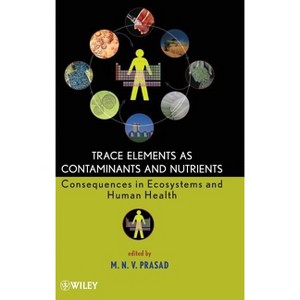
Trace Elements as Contaminants and Nutrients - by Majeti Narasimha Vara Prasad Hardcover
In Stock
Sponsored
About this item
Highlights
- Access state-of-the-art research about trace element contamination and its impact on human health in Trace Elements as Contaminants and Nutrients: Consequences in Ecosystems and Human Health.
- About the Author: M. N. V. Prasad, PhD, is a Professor of Environmental Biology at the University of Hyderabad, India, and is the author, coauthor, editor, or coeditor of six books and more than 170 research papers on environmental botany and heavy metal stress in plants.
- 808 Pages
- Science, Chemistry
Description
Book Synopsis
Access state-of-the-art research about trace element contamination and its impact on human health in Trace Elements as Contaminants and Nutrients: Consequences in Ecosystems and Human Health. In this ground-breaking guide, find exhaustive evidence of trace element contamination in the environment with topics like the functions and essentiality of trace metals, bioavailability and uptake biochemistry, membrane biochemistry and transport mechanisms, and enzymology. Find case studies that will reinforce the fundamentals of mineral nutrition in plants and animals and current information about fortified foods and nutrient deficiencies.
From the Back Cover
Recent findings on trace elements in the food chain and the environment
Trace elements are inorganic chemicals usually occurring in small amounts in nature. Trace element deficiencies and contamination are increasing due to the increasing industrialization of farming systems, industrial pollution, and other factors. In the right amounts, trace elements are beneficial; in fact, several trace elements are essential for human and animal health. Deficiencies can produce devastating health defects, while excess exposure or consumption can be harmful or even fatal. With chapters contributed by leading experts in their specialty areas, Trace Elements as Contaminants and Nutrients: Consequences in Ecosystems and Human Health:
-
Uniquely consolidates information on plant and animal nutrient requirements, fortified foods, nutrient deficiencies, and excess exposure via air, water, and soil contamination
-
Addresses areas for which there is a lack of information, such as bioavailability and uptake biochemistry, membrane biochemistry and transport mechanisms, enzymology, mode of action and toxicity, human health implications (efficiency and deficiency of trace elements), and biofortification
-
Covers bioindication and biomonitoring as innovative biotechniques for controlling trace metal influences in the environment
-
Incorporates information on specific elements, including zinc, iron, calcium, iodine, cadmium, lead, arsenic, mercury, selenium, and more
-
Includes case studies
This is a seminal reference for scientists working in geochemistry, hydrology, analytical chemistry, environmental chemistry and biology, and separation science and technology; plant, soil, crop, agricultural, food, and water scientists; academic and regulatory professionals in these fields; and aid agencies and non-governmental organizations.
About the Author
M. N. V. Prasad, PhD, is a Professor of Environmental Biology at the University of Hyderabad, India, and is the author, coauthor, editor, or coeditor of six books and more than 170 research papers on environmental botany and heavy metal stress in plants. Dr. Prasad is an elected Fellow of the Linnean Society of London, England, and the National Institute of Ecology, New Delhi, India; life member of the National Institute of Ecology and the Bioenergy Society of India; and a member of the International Allelopathy Society and the Indian Network for Soil Contamination Research.
Shipping details
Return details
Trending Non-Fiction