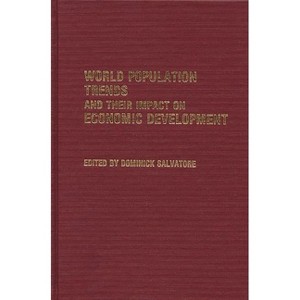
This volume brings together a group of renowned population specialists from the United Nations, the World Bank, the East-West Population Institute, and leading universities to explore the numerous interactions between levels of population growth and economic well-being in developing countries.
About the Author: DOMINICK SALVATORE is Chairman and Professor of Economics at Fordham University.
251 Pages
Business + Money Management, Development
Series Name: Contributions in Economics and Economic History
Description
About the Book
This volume brings together a group of renowned population specialists from the United Nations, the World Bank, the East-West Population Institute, and leading universities to explore the numerous interactions between levels of population growth and economic well-being in developing countries. The contributors challenge conventional theories that high population growth rates have unequivocally adverse consequences for economic development, demonstrating that the evidence is far from conclusive on this point. They similarly question those who argue for generally neutral or even beneficial effects of high population growth rates, showing that here, too, the evidence is less than unequivocal in either direction. Instead, they argue, the nature and direction of the relationship between population growth and economic development is most likely to be situation specific.
Book Synopsis
This volume brings together a group of renowned population specialists from the United Nations, the World Bank, the East-West Population Institute, and leading universities to explore the numerous interactions between levels of population growth and economic well-being in developing countries. The contributors challenge conventional theories that high population growth rates have unequivocally adverse consequences for economic development, demonstrating that the evidence is far from conclusive on this point. They similarly question those who argue for generally neutral or even beneficial effects of high population growth rates, showing that here, too, the evidence is less than unequivocal in either direction. Instead, they argue, the nature and direction of the relationship between population growth and economic development is most likely to be situation specific.
Review Quotes
?This book explores the question of how population growth affects economic development. It is divided into three parts. In part one, contributors examine population growth and economic development. Part two considers migration, population growth, and economic development; and the third part analyzes population size and growth, technological change, the status of women, and international responsibilities.?-Journal of Planning Literature
"This book explores the question of how population growth affects economic development. It is divided into three parts. In part one, contributors examine population growth and economic development. Part two considers migration, population growth, and economic development; and the third part analyzes population size and growth, technological change, the status of women, and international responsibilities."-Journal of Planning Literature
About the Author
DOMINICK SALVATORE is Chairman and Professor of Economics at Fordham University.
Dimensions (Overall): 9.21 Inches (H) x 6.14 Inches (W) x .63 Inches (D)
Weight: 1.18 Pounds
Suggested Age: 22 Years and Up
Number of Pages: 251
Genre: Business + Money Management
Sub-Genre: Development
Series Title: Contributions in Economics and Economic History
Publisher: Praeger
Theme: Economic Development
Format: Hardcover
Author: Dominick Salvatore
Language: English
Street Date: August 24, 1988
TCIN: 1007637497
UPC: 9780313257650
Item Number (DPCI): 247-06-0571
Origin: Made in the USA or Imported
If the item details aren’t accurate or complete, we want to know about it.
Shipping details
Estimated ship dimensions: 0.63 inches length x 6.14 inches width x 9.21 inches height
Estimated ship weight: 1.18 pounds
We regret that this item cannot be shipped to PO Boxes.
This item cannot be shipped to the following locations: American Samoa (see also separate entry under AS), Guam (see also separate entry under GU), Northern Mariana Islands, Puerto Rico (see also separate entry under PR), United States Minor Outlying Islands, Virgin Islands, U.S., APO/FPO
Return details
This item can be returned to any Target store or Target.com.
This item must be returned within 90 days of the date it was purchased in store, shipped, delivered by a Shipt shopper, or made ready for pickup.