Sponsored
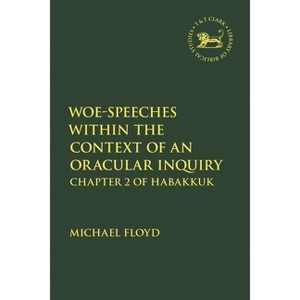
Woe-Speeches Within the Context of an Oracular Inquiry - (Library of Hebrew Bible/Old Testament Studies) by Michael Floyd (Hardcover)
In Stock
Sponsored
About this item
Highlights
- Michael H. Floyd explores how the woe-speeches in Habakkuk 2:6-20 are related in form and content to the message revealed to the prophet in Hab 2:1-5, defending his reading through spirited debate with other scholars who have similarly proposed a fresh take on various exegetical puzzles of Chapter 2.
- About the Author: Michael H. Floyd taught Old Testament at the Seminary of the Southwest, USA, for twenty-five years, and then taught for three years at the Centro de Estudios Teológicos in Santo Domingo, Dominican Republic.
- 160 Pages
- Religion + Beliefs, Biblical Studies
- Series Name: Library of Hebrew Bible/Old Testament Studies
Description
About the Book
"Michael H. Floyd explores how the woe-speeches in Habakkuk 2:6-20 are related in form and content to the message revealed to the prophet in Hab 2:1-5, defending his reading through spirited debate with other scholars who have similarly proposed a fresh take on various exegetical puzzles of Chapter 2. After assessing the preceding material in Habakkuk 2 as the necessary prelude to analyzing the woe-speeches themselves, Floyd explores the form and function of the woe-speeches themselves, in light of how they fit into the unfolding composition of the oracular report that makes up Habakkuk 2. He further brings together and systematizes previous observations about the rhetoric of reproof, arguing that the woe-speeches themselves represent a different type of reproof speech, one that also draws upon wisdom traditions but uses them in a way that is more accusatory and self-incriminating than persuasive and correctional. He proposes that, although the outcry of the nations in Habakkuk 2 is obviously a fictional representation of the international situation, it nevertheless expresses a realpolitik critique of ancient Near Eastern imperialism. Floyd concludes that as an integral part of Habakkuk's oracular inquiry, the woe-speeches provide a basis for a critique of the idolatrous ideology of imperialism and a model of how to live hopefully despite being under an imperialistic thumb." -- Publisher's website, viewed 5-2025.
Book Synopsis
Michael H. Floyd explores how the woe-speeches in Habakkuk 2:6-20 are related in form and content to the message revealed to the prophet in Hab 2:1-5, defending his reading through spirited debate with other scholars who have similarly proposed a fresh take on various exegetical puzzles of Chapter 2.
After assessing the preceding material in Habakkuk 2 as the necessary prelude to analyzing the woe-speeches themselves, Floyd explores the form and function of the woe-speeches themselves, in light of how they fit into the unfolding composition of the oracular report that makes up Habakkuk 2. He further brings together and systematizes previous observations about the rhetoric of reproof, arguing that the woe-speeches themselves represent a different type of reproof speech, one that also draws upon wisdom traditions but uses them in a way that is more accusatory and self-incriminating than persuasive and correctional. He proposes that, although the outcry of the nations in Habakkuk 2 is obviously a fictional representation of the international situation, it nevertheless expresses a realpolitik critique of ancient Near Eastern imperialism. Floyd concludes that as an integral part of Habakkuk's oracular inquiry, the woe-speeches provide a basis for a critique of the idolatrous ideology of imperialism and a model of how to live hopefully despite being under an imperialistic thumb.
About the Author
Michael H. Floyd taught Old Testament at the Seminary of the Southwest, USA, for twenty-five years, and then taught for three years at the Centro de Estudios Teológicos in Santo Domingo, Dominican Republic. Before retiring back to the United States he did a three-year stint as pastor of Advent-St. Nicholas Church in Quito, Ecuador.
Shipping details
Return details
Frequently bought together

Trending Non-Fiction