Sponsored
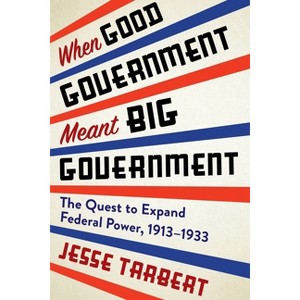
When Good Government Meant Big Government - by Jesse Tarbert (Paperback)
In Stock
Sponsored
About this item
Highlights
- The years after World War I have often been seen as an era when Republican presidents and business leaders brought the growth of government in the United States to a sudden and emphatic halt.
- About the Author: Jesse Tarbert is a historian who has taught at Loyola University Maryland and Case Western Reserve University.
- 240 Pages
- History, United States
Description
About the Book
The years after World War I have often been seen as an era when Republican presidents and business leaders brought the growth of government in the United States to a halt. Jesse Tarbert reveals a forgotten effort by business-allied reformers to expand federal power--and how that effort was foiled by Southern Democrats and their political allies.
Book Synopsis
The years after World War I have often been seen as an era when Republican presidents and business leaders brought the growth of government in the United States to a sudden and emphatic halt. In When Good Government Meant Big Government, the historian Jesse Tarbert inverts the traditional story by revealing a forgotten effort by business-allied reformers to expand federal power--and how that effort was foiled by Southern Democrats and their political allies.
Tarbert traces how a loose-knit coalition of corporate lawyers, bankers, executives, genteel reformers, and philanthropists emerged as the leading proponents of central control and national authority in government during the 1910s and 1920s. Motivated by principles of "good government" and using large national corporations as a model, these elite reformers sought to transform the federal government's ineffectual executive branch into a modern organization with the capacity to solve national problems. They achieved some success during the presidency of Warren G. Harding, but the elite reformers' support for federal antilynching legislation confirmed the worries of white Southerners who feared that federal power would pose a threat to white supremacy. Working with others who shared their preference for local control of public administration, Southern Democrats led a backlash that blocked enactment of the elite reformers' broader vision for a responsive and responsible national government.
Offering a novel perspective on politics and policy in the years before the New Deal, this book sheds new light on the roots of the modern American state and uncovers a crucial episode in the long history of racist and antigovernment forces in American life.
Review Quotes
In Good Government, we see American policymakers look, for the first time, to the corporation for inspiration in how to run the country, only to find that America could not be as easily ruled as the market. In this sweeping and writerly history, Tarbert lays bare the pre-history of our own times, as early 20th century reformers struggle with how to manage big government, white supremacy, and economic dislocations.--Louis Hyman, author of Temp: How American Work, American Business, and the American Dream Became Temporary
About the Author
Jesse Tarbert is a historian who has taught at Loyola University Maryland and Case Western Reserve University.
Shipping details
Return details
Frequently bought together




Trending Non-Fiction





Discover more options