Sponsored
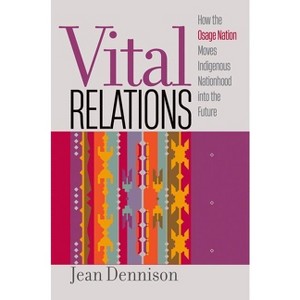
Vital Relations - (Critical Indigeneities) by Jean Dennison (Paperback)
In Stock
Sponsored
About this item
Highlights
- Relationality is a core principle of Indigenous studies, yet there is relatively little work that assesses what building relations looks like in practice, especially in the messy context of Native nations' governance.
- Author(s): Jean Dennison
- 236 Pages
- Social Science, Ethnic Studies
- Series Name: Critical Indigeneities
Description
About the Book
"Relationality is a core principle of Indigenous studies, yet there is relatively little work that assesses what building relations looks like in practice, especially in the messy context of Native nations' governance. Focusing on the unique history and context of Osage nation building efforts, this insightful ethnography provides a deeper vision of the struggles Native nation leaders are currently facing. Exploring the Osage philosophy of moving to a new country as a framework for relational governance, Jean Dennison shows that for the Osage, nation building is an ongoing process of reworking colonial constraints to serve the nation's own ends. As Dennison argues, Osage officials have undertaken deliberate changes to strengthen Osage relations to their language, self-governance, health, and land-core needs for a people to thrive now and into the future. Scholars and future Indigenous leaders can learn from the Osage Nation's past challenges, strategies, and ongoing commitments to better enact the difficult work of Indigenous nation building"--
Book Synopsis
Relationality is a core principle of Indigenous studies, yet there is relatively little work that assesses what building relations looks like in practice, especially in the messy context of Native nations' governance. Focusing on the unique history and context of Osage nation building efforts, this insightful ethnography provides a deeper vision of the struggles Native nation leaders are currently facing. Exploring the Osage philosophy of moving to a new country as a framework for relational governance, Jean Dennison shows that for the Osage, nation building is an ongoing process of reworking colonial constraints to serve the nation's own ends. As Dennison argues, Osage officials have undertaken deliberate changes to strengthen Osage relations to their language, self-governance, health, and land--core needs for a people to thrive now and into the future.
Scholars and future Indigenous leaders can learn from the Osage Nation's past challenges, strategies, and ongoing commitments to better enact the difficult work of Indigenous nation building.
Shipping details
Return details

Trending Non-Fiction




Discover more options