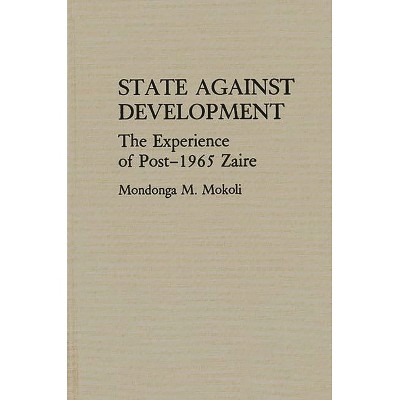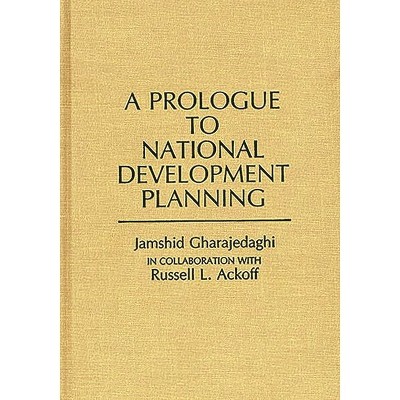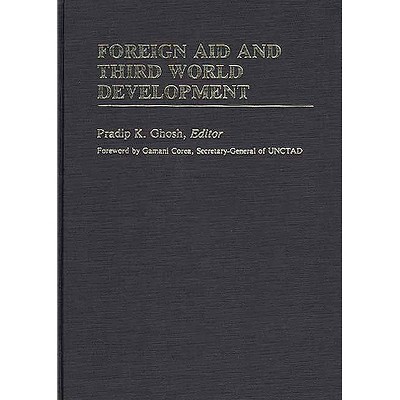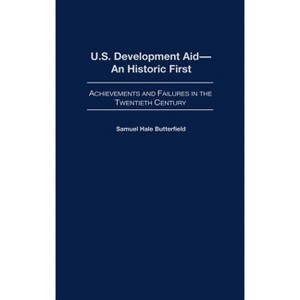
The first comprehensive account of U.S. development aid policies and implementation operations in Africa, Asia, and Latin America, this work is a unique contribution to world history and to the extensive literature on Third World development.
About the Author: SAMUEL HALE BUTTERFIELD was a career officer in America's development aid program from 1958 through 1980, serving in senior positions in Africa, South Asia, and Washington.
336 Pages
Business + Money Management, Development
Series Name: Contributions to the Study of World History
Description
About the Book
The first comprehensive account of U.S. development aid policies and implementation operations in Africa, Asia, and Latin America, this work is a unique contribution to world history and to the extensive literature on Third World development. Butterfield begins with the remarkable story of why, in 1949, President Truman surprised Americans with his unprecedented development aid policy. He then describes the major alterations in U.S. development aid strategy and operations from 1950 to 2000. Drawing upon his long experience both in Washington and in country aid missions, Butterfield puts a human face on the story by weaving real world vignettes into his narrative.
The survey addresses the role of Congress, important program foundations established in the 1950s, creative initiatives of the 1960s, frustrated promises in Vietnam. It explores the Third World's unexpected population explosion; America's evolving technical assistance work in the core sectors such as agriculture, education, health, and administration; and initiatives to reach the rural poor and promote the development role of women. It also comments upon linkages between policy dialogue and financial aid to promote market-oriented policy reforms, Africa's lagging development, and the decline of U.S. development aid in the 1990s.
Book Synopsis
The first comprehensive account of U.S. development aid policies and implementation operations in Africa, Asia, and Latin America, this work is a unique contribution to world history and to the extensive literature on Third World development. Butterfield begins with the remarkable story of why, in 1949, President Truman surprised Americans with his unprecedented development aid policy. He then describes the major alterations in U.S. development aid strategy and operations from 1950 to 2000. Drawing upon his long experience both in Washington and in country aid missions, Butterfield puts a human face on the story by weaving real world vignettes into his narrative.
The survey addresses the role of Congress, important program foundations established in the 1950s, creative initiatives of the 1960s, frustrated promises in Vietnam. It explores the Third World's unexpected population explosion; America's evolving technical assistance work in the core sectors such as agriculture, education, health, and administration; and initiatives to reach the rural poor and promote the development role of women. It also comments upon linkages between policy dialogue and financial aid to promote market-oriented policy reforms, Africa's lagging development, and the decline of U.S. development aid in the 1990s.
Review Quotes
?[A] welcome explanation, free of jargon and academic language, that would be useful to many USAID recent hires as well as the wider general public interested in aid....[t]ruly a tour de force for anyone wanting to gain broad, historical, and in-depth understanding of foreign aid.?-Front Lines
?[A]n exhaustive quasi-memoir by a retired foreign aid officer at USAID. It is, in part, a fond reminiscence of his career, but in larger part, a defense of USAID's work from the inside, as well as the global foreign aid project of the developed world. It is not misty-eyed about the poor -- useful insights about the practicalities of foreign aid operations and impediments to their success abound. But its true value derives from the concrete, meticulous, well-organized, occasionally pedantic, chronology and description of USAID's actual day-to-day work in the field from its inception almost up to the present.?-EH.NET
?Scholars devoted to this topic may find some useful discussion of the early history of US foreign aid and a number of interesting tidbits scattered throughout the book....Comprehensive research collections.?-Choice
"ÝA¨ welcome explanation, free of jargon and academic language, that would be useful to many USAID recent hires as well as the wider general public interested in aid....Ýt¨ruly a tour de force for anyone wanting to gain broad, historical, and in-depth understanding of foreign aid."-Front Lines
"ÝA¨n exhaustive quasi-memoir by a retired foreign aid officer at USAID. It is, in part, a fond reminiscence of his career, but in larger part, a defense of USAID's work from the inside, as well as the global foreign aid project of the developed world. It is not misty-eyed about the poor -- useful insights about the practicalities of foreign aid operations and impediments to their success abound. But its true value derives from the concrete, meticulous, well-organized, occasionally pedantic, chronology and description of USAID's actual day-to-day work in the field from its inception almost up to the present."-EH.NET
"[A]n exhaustive quasi-memoir by a retired foreign aid officer at USAID. It is, in part, a fond reminiscence of his career, but in larger part, a defense of USAID's work from the inside, as well as the global foreign aid project of the developed world. It is not misty-eyed about the poor -- useful insights about the practicalities of foreign aid operations and impediments to their success abound. But its true value derives from the concrete, meticulous, well-organized, occasionally pedantic, chronology and description of USAID's actual day-to-day work in the field from its inception almost up to the present."-EH.NET
"Scholars devoted to this topic may find some useful discussion of the early history of US foreign aid and a number of interesting tidbits scattered throughout the book....Comprehensive research collections."-Choice
"[A] welcome explanation, free of jargon and academic language, that would be useful to many USAID recent hires as well as the wider general public interested in aid....[t]ruly a tour de force for anyone wanting to gain broad, historical, and in-depth understanding of foreign aid."-Front Lines
About the Author
SAMUEL HALE BUTTERFIELD was a career officer in America's development aid program from 1958 through 1980, serving in senior positions in Africa, South Asia, and Washington. After retiring, he taught theory and practice of international development and served as an advisor on sustainable resource management in the Third World. This is his first book.
Dimensions (Overall): 9.54 Inches (H) x 6.44 Inches (W) x 1.17 Inches (D)
Weight: 1.43 Pounds
Suggested Age: 22 Years and Up
Number of Pages: 336
Genre: Business + Money Management
Sub-Genre: Development
Series Title: Contributions to the Study of World History
Publisher: Praeger
Theme: Economic Development
Format: Hardcover
Author: Samuel Hale Butterfield
Language: English
Street Date: August 30, 2004
TCIN: 1007349574
UPC: 9780313319105
Item Number (DPCI): 247-52-1766
Origin: Made in the USA or Imported
If the item details aren’t accurate or complete, we want to know about it.
Shipping details
Estimated ship dimensions: 1.17 inches length x 6.44 inches width x 9.54 inches height
Estimated ship weight: 1.43 pounds
We regret that this item cannot be shipped to PO Boxes.
This item cannot be shipped to the following locations: American Samoa (see also separate entry under AS), Guam (see also separate entry under GU), Northern Mariana Islands, Puerto Rico (see also separate entry under PR), United States Minor Outlying Islands, Virgin Islands, U.S., APO/FPO
Return details
This item can be returned to any Target store or Target.com.
This item must be returned within 90 days of the date it was purchased in store, shipped, delivered by a Shipt shopper, or made ready for pickup.