Sponsored
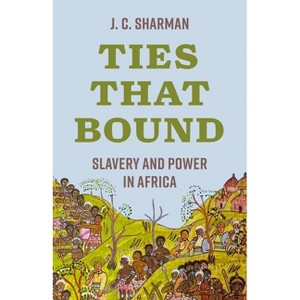
Ties That Bound - by J C Sharman (Hardcover)
Pre-order
Sponsored
About this item
Highlights
- How slavery and the slave trade provided African rulers with a path to political power Across history, slavery has been central to political power.
- About the Author: J. C. Sharman is the Sir Patrick Sheehy Professor of International Relations at the University of Cambridge and a Fellow of King's College, Cambridge.
- 280 Pages
- History, Africa
Description
Book Synopsis
How slavery and the slave trade provided African rulers with a path to political power
Across history, slavery has been central to political power. By the nineteenth century, African rulers dominated the slave trade with the European and Islamic worlds. In Ties That Bound, J. C. Sharman shows how these rulers were empowered by slavery, converting profits from the market for humans into political might. As demand for African captives grew, a new breed of African bandit slave traders-turned-kings leveraged the increasing returns to seize and hold power, paying off followers and buying weapons. Eventually, there were more enslaved Africans within Africa than in the Americas; African kingdoms were secured and administered by slave soldiers and slave officials. Engaging in the slave trade became vital for political survival; success for a few powerful leaders meant misery for millions across the continent.
Arguing that slavery is fundamentally political and relational, Sharman examines the effects of Africa's slavery-centered connections and linkages with the wider world. This route to power by enslaving others required engagement with other countries, sometimes in war, sometimes in trade and sometimes in both. More than any other region, Africa's experiences show how slavery as a foundation of power depended on ties between insiders and outsiders. Sharman describes how African rulers became locked into increasingly destructive competition with each other. As much of the continent was ravaged by warlords, the very factors that strengthened rulers individually weakened them collectively, and the resulting destruction paved the way for European conquest in the late nineteenth century's "Scramble for Africa."
About the Author
J. C. Sharman is the Sir Patrick Sheehy Professor of International Relations at the University of Cambridge and a Fellow of King's College, Cambridge. He is the author of Empires of the Weak: The Real Story of European Expansion and the Creation of the New World Order and the coauthor of Outsourcing Empire: How Company-States Made the Modern World (both Princeton).
Shipping details
Return details
Frequently bought together



Trending Non-Fiction





Discover more options