Sponsored
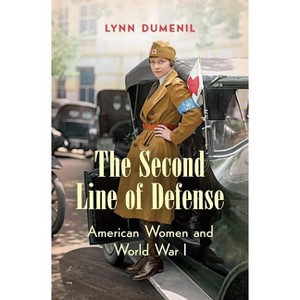
The Second Line of Defense - by Lynn Dumenil (Paperback)
In Stock
Sponsored
About this item
Highlights
- In tracing the rise of the modern idea of the American "new woman," Lynn Dumenil examines World War I's surprising impact on women and, in turn, women's impact on the war.
- Author(s): Lynn Dumenil
- 360 Pages
- History, Women
Description
Book Synopsis
In tracing the rise of the modern idea of the American "new woman," Lynn Dumenil examines World War I's surprising impact on women and, in turn, women's impact on the war. Telling the stories of a diverse group of women, including African Americans, dissidents, pacifists, reformers, and industrial workers, Dumenil analyzes both the roadblocks and opportunities they faced. She richly explores the ways in which women helped the United States mobilize for the largest military endeavor in the nation's history. Dumenil shows how women activists staked their claim to loyal citizenship by framing their war work as homefront volunteers, overseas nurses, factory laborers, and support personnel as "the second line of defense." But in assessing the impact of these contributions on traditional gender roles, Dumenil finds that portrayals of these new modern women did not always match with real and enduring change. Extensively researched and drawing upon popular culture sources as well as archival material, The Second Line of Defense offers a comprehensive study of American women and war and frames them in the broader context of the social, cultural, and political history of the era.
Review Quotes
"[A] unique and previously unexplored view into a rarely examined history." -- Library Journal
"A sweeping synthesis of American women's responses to their country's involvement in World War I." -- LABOUR
"An elegant writer and vivid storyteller, Lynn Dumenil brings to life the experiences of women during World War I. She shows how the war offered women different opportunities -- including protest, home front work, and service abroad -- and challenged gender conventions. A great read!" -- Elaine Tyler May, author of Homeward Bound
"An indispensable study of U.S. women's experiences and efforts during World War I." -- Journal of Southern History
"An overview of the research on American women's wartime experiences with a finely crafted text accessible to scholars, students, and the general public." -- Journal of Military History
"Dumenil establishes without a doubt in this important overview that women provided matchless, indispensable service in a time of national crisis. The Second Line of Defense re-creates the vibrant, bustling, complex world that women carried upon their shoulders. Readers have no further excuse not to see them." -- The Journal of the Gilded Age and Progressive Era
"Dumenil provide[s] [an] excellent [analysis] that depict[s] the numerous ways in which American women overturned the polite social conventions that kept men and women separated in public spaces. The visibility of women in war work on the home front in factories and as citizen-soldiers in France challenged Victorian and Edwardian gender norms and, ultimately, influenced federal policy to extend the vote to American women."--U.S. Military History Review
"Dumenil, in this fresh interpretation, revises and updates the question of women's enfranchisement by putting suffrage history into conversation with histories of women's labor in the war." -- Women's Review of Books
"In The Second Line of Defense, one of the leading historians of twentieth-century America remakes our understanding of the First World War. Drawing on fascinating new sources and written with a storyteller's ear for the lost voices of our nation's past, Lynn Dumenil's book should be required reading for anyone seeking to understand the America we live in a century later." -- Chris Capozzola, Massachusetts Institute of Technology
"With an emphasis on African-American women, the author highlights the ways that these resourceful individuals proved their patriotism in the workplace, unions, suffrage, and the public square during [World War I]. Of particular importance is Dumenil's analysis of women's roles in films. . . . Recommended." -- CHOICE
Shipping details
Return details
Frequently bought together





Trending Non-Fiction