Sponsored
In Stock
Sponsored
About this item
Highlights
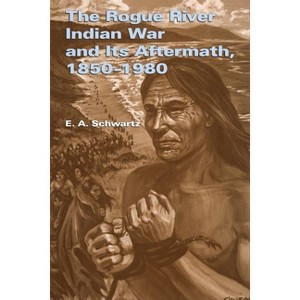
- From 1855 to 1856 in western Oregon, the Native peoples along the Rogue River outmaneuvered and repeatedly drove off white opponents.
- Author(s): E a Schwartz
- 372 Pages
- History, Native American
Description
About the Book
From 1855 to 1856 in western Oregon, the Native peoples along the Rogue River outmaneuvered and repeatedly drove off white opponents. In The Rogue River Indian War and Its Aftermath, 1850-1980, historian E. A. Schwartz explores the tribal groups' resilience not only during this war but also in every period of federal Indian policy that followed.
Book Synopsis
From 1855 to 1856 in western Oregon, the Native peoples along the Rogue River outmaneuvered and repeatedly drove off white opponents. In The Rogue River Indian War and Its Aftermath, 1850-1980, historian E. A. Schwartz explores the tribal groups' resilience not only during this war but also in every period of federal Indian policy that followed.
Schwartz's work examines Oregon Indian people's survival during American expansion as they coped with each federal initiative, from reservation policies in the nineteenth century through termination and restoration in the twentieth. While their resilience facilitated their success in adjusting to white society, it also made the people known today as the Confederated Tribes of Siletz Indians susceptible to federal termination programs in the 1970s--efforts that would have dissolved their communities and given their resources to non-Indians.
Drawing on a range of federal documents and anthropological sources, Schwartz explores both the history of Native peoples of western Oregon and U.S. Indian policy and its effects.
Review Quotes
"[This book] is the first detailed history of many native groups from western Oregon. It is a significant and revealing study, broad in scope and implications, and it will change the way we view the past of Native Americans of the Pacific Northwest." --Clifford E. Trafzer, author of The Kit Carson Campaign
Shipping details
Return details
Frequently bought together

Trending Non-Fiction






Discover more options