Target New ArrivalsGift Ideas for MomClothing, Shoes & AccessoriesHome & DecorKitchen & DiningOutdoor Living & GardenGroceryHousehold EssentialsBabyBeautyPersonal CareHealthWellnessLuggageSports & OutdoorsToysElectronicsVideo GamesMovies, Music & BooksSchool & Office SuppliesParty SuppliesGift IdeasGift CardsPetsUlta Beauty at TargetShop by CommunityTarget OpticalDealsClearanceTarget New ArrivalsSpring OutfitsGift Ideas for MomWomen’s Festival OutfitsTop DealsTarget Circle DealsWeekly AdShop Order PickupShop Same Day DeliveryRegistryRedCardTarget CircleFind Stores
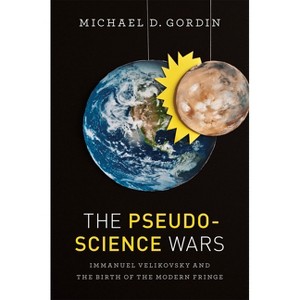
The Pseudoscience Wars - by  Michael D Gordin (Paperback) - 1 of 1

The Pseudoscience Wars - by Michael D Gordin (Paperback)

$21.00

In Stock

Free & easy returns

Free & easy returns

Return this item by mail or in store within 90 days for a full refund.
Eligible for registries and wish lists

About this item

Highlights

  • Properly analyzed, the collective mythological and religious writings of humanity reveal that around 1500 BC, a comet swept perilously close to Earth, triggering widespread natural disasters and threatening the destruction of all life before settling into solar orbit as Venus, our nearest planetary neighbor.
  • About the Author: Michael D. Gordin is professor of history at Princeton University and the author of a number of books, including Red Cloud at Dawn: Truman, Stalin, and the End of the Atomic Monopoly.
  • 304 Pages
  • Philosophy, General

Description


Book Synopsis


Properly analyzed, the collective mythological and religious writings of humanity reveal that around 1500 BC, a comet swept perilously close to Earth, triggering widespread natural disasters and threatening the destruction of all life before settling into solar orbit as Venus, our nearest planetary neighbor. Sound implausible? Well, from 1950 until the late 1970s, a huge number of people begged to differ, as they devoured Immanuel Velikovsky's major best-seller, Worlds in Collision, insisting that perhaps this polymathic thinker held the key to a new science and a new history. Scientists, on the other hand, assaulted Velikovsky's book, his followers, and his press mercilessly from the get-go. In The Pseudoscience Wars, Michael D. Gordin resurrects the largely forgotten figure of Velikovsky and uses his strange career and surprisingly influential writings to explore the changing definitions of the line that separates legitimate scientific inquiry from what is deemed bunk, and to show how vital this question remains to us today. Drawing on a wealth of previously unpublished material from Velikovsky's personal archives, Gordin presents a behind-the-scenes history of the writer's career, from his initial burst of success through his growing influence on the counterculture, heated public battles with such luminaries as Carl Sagan, and eventual eclipse. Along the way, he offers fascinating glimpses into the histories and effects of other fringe doctrines, including creationism, Lysenkoism, parapsychology, and more--all of which have surprising connections to Velikovsky's theories. Science today is hardly universally secure, and scientists seem themselves beset by critics, denialists, and those they label "pseudoscientists"--as seen all too clearly in battles over evolution and climate change. The Pseudoscience Wars simultaneously reveals the surprising Cold War roots of our contemporary dilemma and points readers to a different approach to drawing the line between knowledge and nonsense.


Review Quotes


"Gordin . . . is remarkably evenhanded. . . . This won't put an end to the debates that rage between legitimate scientific research and other fringe doctrines, but it does lay the Velikovsky affair to rest with fairness and clarity and will help to put into perspective many of the controversies swirling around today's scientific landscape. A good read for those interested in the history of science or pseudoscientific theories."

-- "Library Journal"

"What is the difference between science and pseudoscience? As the publisher of Skeptic magazine and the 'Skeptic columnist for Scientific American I am frequently asked this question. Believe it or not, it'a a hard question to answer. Michael Gordin's The Pseudoscience Wars is the best single volume I have come across in my vast reading on the topic. He clearly and succinctly captures all sides on the debate, is rigorous in his research and fair to both believers and skeptics, and his narrative reconstruction of the Velikovsky affair makes for gripping reading. The Pseudoscience Wars is destined to become a classic in science literature."

--Michael Shermer, publisher of Skeptic magazine, monthly columnist for Scientific American, author of The Believing Brain

"A slyly funny writer. . . . Make no mistake: Gordin's sympathies are not with the occult. His fascination with pseudoscience is more like a negative method: the experts define the boundaries of their domain by fending off the quacks. For Gordin, pseudoscience is an instrument by which he takes the temperature of the past. . . . . The Pseudoscience Wars is a relatively slim volume, but Gordin siphons into it an overwhelming amount of information."-- "New Republic"

"Scholarly and highly readable. . . . Gordin's historical analysis of pseudoscience remains disturbingly relevant."-- "Nature"

"Those who are interested in how bad ideas start, how they diffuse, how they covet and resist confrontation, and how they wax and wane in popularity over time will find much food for thought in this gripping book."

-- "Science"

"Few issues loom more important today than the boundaries and authority of scientific expertise. How do the boundaries get created and reinforced, and what work do terms like 'pseudoscience' do in the debates? By delving deep into one of the earliest border skirmishes of the modern age--the fascinating, beguiling case of Immanuel Velikovsky, his heterodox theories of human history and cosmic evolution, and the firestorm of protest they elicited from the scientific community--Michael Gordin offers us a roadmap of the modern fringe. Scouring extraordinary sources with his keen analytic eye, Gordin reveals the roots of today's pseudoscience wars. Engrossing and illuminating."

--David Kaiser, author of How the Hippies Saved Physics: Science, Counterculture, and the Quantum Revival


About the Author


Michael D. Gordin is professor of history at Princeton University and the author of a number of books, including Red Cloud at Dawn: Truman, Stalin, and the End of the Atomic Monopoly. He lives in Princeton, New Jersey.

Dimensions (Overall): 9.0 Inches (H) x 6.04 Inches (W) x .64 Inches (D)
Weight: .91 Pounds
Suggested Age: 22 Years and Up
Number of Pages: 304
Genre: Philosophy
Sub-Genre: General
Publisher: University of Chicago Press
Format: Paperback
Author: Michael D Gordin
Language: English
Street Date: August 14, 2013
TCIN: 1006092722
UPC: 9780226101729
Item Number (DPCI): 247-30-6509
Origin: Made in the USA or Imported
If the item details aren’t accurate or complete, we want to know about it.

Shipping details

Estimated ship dimensions: 0.64 inches length x 6.04 inches width x 9 inches height
Estimated ship weight: 0.91 pounds
We regret that this item cannot be shipped to PO Boxes.
This item cannot be shipped to the following locations: American Samoa (see also separate entry under AS), Guam (see also separate entry under GU), Northern Mariana Islands, Puerto Rico (see also separate entry under PR), United States Minor Outlying Islands, Virgin Islands, U.S., APO/FPO, Alaska, Hawaii

Return details

This item can be returned to any Target store or Target.com.
This item must be returned within 90 days of the date it was purchased in store, delivered to the guest, delivered by a Shipt shopper, or picked up by the guest.
See the return policy for complete information.

Q: What aspects of pseudoscience are covered in this book?

submitted by AI Shopping Assistant - 1 month ago
  • A: It addresses fringe doctrines like creationism, Lysenkoism, and parapsychology, exploring their connections to Velikovsky's ideas.

    submitted byAI Shopping Assistant - 1 month ago
    Ai generated

Q: What is the genre of The Pseudoscience Wars?

submitted by AI Shopping Assistant - 1 month ago
  • A: The genre is philosophy, specifically within the sub-genre of general philosophical inquiry.

    submitted byAI Shopping Assistant - 1 month ago
    Ai generated

Q: Who is the primary figure discussed in The Pseudoscience Wars?

submitted by AI Shopping Assistant - 1 month ago
  • A: The book focuses on Immanuel Velikovsky and his controversial theories on history and science.

    submitted byAI Shopping Assistant - 1 month ago
    Ai generated

Q: How does Gordin approach the topic of scientific legitimacy?

submitted by AI Shopping Assistant - 1 month ago
  • A: Gordin offers a nuanced exploration of what delineates valid scientific inquiry from pseudoscience in historical context.

    submitted byAI Shopping Assistant - 1 month ago
    Ai generated

Q: What historical events does Gordin explore in this book?

submitted by AI Shopping Assistant - 1 month ago
  • A: Gordin examines the impact of a comet and its connections to natural disasters around 1500 BC.

    submitted byAI Shopping Assistant - 1 month ago
    Ai generated

Additional product information and recommendations

Discover more options

Trending Philosophy

Get top deals, latest trends, and more.

Privacy policy