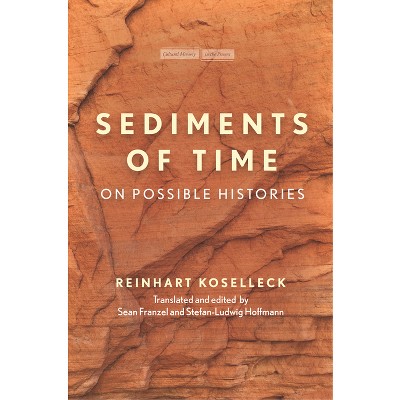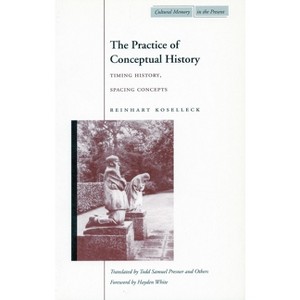
Reinhart Koselleck is one of the most important theorists of history and historiography of the last half century.
About the Author: Reinhart Koselleck is Professor of History at the University of Bielefeld.
384 Pages
History, Study & Teaching
Series Name: Cultural Memory in the Present
Description
About the Book
Reinhart Koselleck is one of the most important theorists of history and historiography of the last half century. He is the foremost exponent and practitioner of Begriffsgeschichte, a methodology of historical studies exemplified in these 18 essays, which focus on the invention and development of the fundamental concepts underlying and informing a distinctively historical manner of being in the world.
Book Synopsis
Reinhart Koselleck is one of the most important theorists of history and historiography of the last half century. His work has implications for contemporary cultural studies that extend far beyond discussions of the practical problems of historical method. He is the foremost exponent and practitioner of Begriffsgeschichte, a methodology of historical studies that focuses on the invention and development of the fundamental concepts underlying and informing a distinctively historical manner of being in the world.
The eighteen essays in this volume illustrate the four theses of Koselleck's concept of history. First, historical process is marked by a distinctive kind of temporality different from that found in nature. This temporality is multileveled and subject to different rates of acceleration and deceleration, and functions not only as a matrix within which historical events happen but also as a causal force in the determination of social reality in its own right.
Second, historical reality is social reality, an internally differentiated structure of functional relationships in which the rights and interests of one group collide with those of other groups, and lead to the kinds of conflict in which defeat is experienced as an ethical failure requiring reflection on "what went wrong" to determine the historical significance of the conflict itself.
Third, the history of historiography is a history of the evolution of the language of historians. In this respect, Koselleck's work converges with that of Barthes, Foucault, and Derrida, all of whom stress the status of historiography as discourse rather than as discipline, and feature the constitutive nature of historical discourse as against its claim to literal truthfulness.
Finally, the fourth aspect of Koselleck's notion of the concept of history is that a properly historicist concept of history is informed by the realization that what we call modernity is nothing more than an aspect of the discovery of history's concept in our age. The aporias of modernism--in arts and letters as well as in the human and natural sciences--are a function of the discovery of the historicity of both society and knowledge.
From the Back Cover
Reinhart Koselleck is one of the most important theorists of history and historiography of the last half century. His work has implications for contemporary cultural studies that extend far beyond discussions of the practical problems of historical method. He is the foremost exponent and practitioner of Begriffsgeschichte, a methodology of historical studies that focuses on the invention and development of the fundamental concepts underlying and informing a distinctively historical manner of being in the world. The eighteen essays in this volume illustrate the four theses of Koselleck's concept of history. First, historical process is marked by a distinctive kind of temporality different from that found in nature. This temporality is multileveled and subject to different rates of acceleration and deceleration, and functions not only as a matrix within which historical events happen but also as a causal force in the determination of social reality in its own right. Second, historical reality is social reality, an internally differentiated structure of functional relationships in which the rights and interests of one group collide with those of other groups, and lead to the kinds of conflict in which defeat is experienced as an ethical failure requiring reflection on "what went wrong" to determine the historical significance of the conflict itself. Third, the history of historiography is a history of the evolution of the language of historians. In this respect, Koselleck's work converges with that of Barthes, Foucault, and Derrida, all of whom stress the status of historiography as discourse rather than as discipline, and feature the constitutive nature of historical discourse as against its claim to literal truthfulness. Finally, the fourth aspect of Koselleck's notion of the concept of history is that a properly historicist concept of history is informed by the realization that what we call modernity is nothing more than an aspect of the discovery of history's concept in our age. The aporias of modernism--in arts and letters as well as in the human and natural sciences--are a function of the discovery of the historicity of both society and knowledge.
About the Author
Reinhart Koselleck is Professor of History at the University of Bielefeld.
Dimensions (Overall): 9.0 Inches (H) x 6.0 Inches (W) x 1.0 Inches (D)
Weight: 1.54 Pounds
Suggested Age: 22 Years and Up
Number of Pages: 384
Genre: History
Sub-Genre: Study & Teaching
Series Title: Cultural Memory in the Present
Publisher: Stanford University Press
Format: Hardcover
Author: Reinhart Koselleck
Language: English
Street Date: July 2, 2002
TCIN: 1008938447
UPC: 9780804740227
Item Number (DPCI): 247-14-9398
Origin: Made in the USA or Imported
If the item details aren’t accurate or complete, we want to know about it.
Shipping details
Estimated ship dimensions: 1 inches length x 6 inches width x 9 inches height
Estimated ship weight: 1.54 pounds
We regret that this item cannot be shipped to PO Boxes.
This item cannot be shipped to the following locations: American Samoa (see also separate entry under AS), Guam (see also separate entry under GU), Northern Mariana Islands, Puerto Rico (see also separate entry under PR), United States Minor Outlying Islands, Virgin Islands, U.S., APO/FPO
Return details
This item can be returned to any Target store or Target.com.
This item must be returned within 90 days of the date it was purchased in store, shipped, delivered by a Shipt shopper, or made ready for pickup.