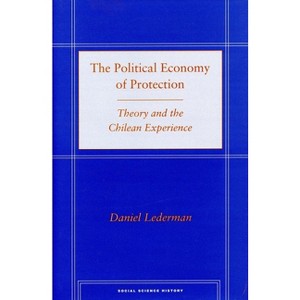
The Political Economy of Protection explains why countries, especially developing countries, change their trade policies over the course of history.
About the Author: Daniel Lederman is Senior Economist in the Office of the Chief Economist for Latin America and the Caribbean at the World Bank.
208 Pages
Business + Money Management, International
Series Name: Social Science History
Description
About the Book
This book explains why countries, especially developing countries, change their trade policies over the course of history. It does so through an interdisciplinary approach which borrows analyses from both political science and economics.
Book Synopsis
The Political Economy of Protection explains why countries, especially developing countries, change their trade policies over the course of history. It does so through an interdisciplinary approach, which borrows analyses from both political science and economics. While the central focus of this book is to explain historical changes in trade policy in one country, Chile, it is broadly relevant for students, scholars, and trade specialists interested in gaining a deeper understanding of the politics and economics of international trade. Given the intensifying public debates about the benefits of globalization, the author provides a uniquely rigorous yet interdisciplinary analysis of the forces that shape trade policy decisions, not just in Chile, but throughout the world.
From the Back Cover
The Political Economy of Protection explains why countries, especially developing countries, change their trade policies over the course of history. It does so through an interdisciplinary approach, which borrows analyses from both political science and economics. While the central focus of this book is to explain historical changes in trade policy in one country, Chile, it is broadly relevant for students, scholars, and trade specialists interested in gaining a deeper understanding of the politics and economics of international trade. Given the intensifying public debates about the benefits of globalization, the author provides a uniquely rigorous yet interdisciplinary analysis of the forces that shape trade policy decisions, not just in Chile, but throughout the world.
Review Quotes
"[This] book will be an ideal source of information for the reader seeking to learn about the long term evolution of protectionism in Chile."--Journal of Economic Literature
"In sum, economic historians will benefit from the availability of this succinct overview of Chilean trade policy....Lederman's book is a good contribution that provides some diversity in historical experience beyond the standard studies of European or North American trade policy."--EH.NET
About the Author
Daniel Lederman is Senior Economist in the Office of the Chief Economist for Latin America and the Caribbean at the World Bank.
Dimensions (Overall): 9.06 Inches (H) x 6.36 Inches (W) x .72 Inches (D)
Weight: .75 Pounds
Suggested Age: 22 Years and Up
Number of Pages: 208
Genre: Business + Money Management
Sub-Genre: International
Series Title: Social Science History
Publisher: Stanford University Press
Theme: General
Format: Hardcover
Author: Daniel Lederman
Language: English
Street Date: March 29, 2005
TCIN: 1008938822
UPC: 9780804749176
Item Number (DPCI): 247-17-9654
Origin: Made in the USA or Imported
If the item details aren’t accurate or complete, we want to know about it.
Shipping details
Estimated ship dimensions: 0.72 inches length x 6.36 inches width x 9.06 inches height
Estimated ship weight: 0.75 pounds
We regret that this item cannot be shipped to PO Boxes.
This item cannot be shipped to the following locations: American Samoa (see also separate entry under AS), Guam (see also separate entry under GU), Northern Mariana Islands, Puerto Rico (see also separate entry under PR), United States Minor Outlying Islands, Virgin Islands, U.S., APO/FPO
Return details
This item can be returned to any Target store or Target.com.
This item must be returned within 90 days of the date it was purchased in store, shipped, delivered by a Shipt shopper, or made ready for pickup.