Sponsored
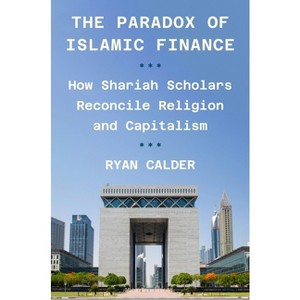
The Paradox of Islamic Finance - by Ryan Calder
In Stock
Sponsored
About this item
Highlights
- How the booming Islamic finance industry became an ultramodern hybrid of religion and markets In just fifty years, Islamic finance has grown from a tiny experiment operated from a Volkswagen van to a thriving global industry worth more than the entire financial sector of India, South America, or Eastern Europe.
- About the Author: Ryan Calder is assistant professor of sociology and director of the Program in Islamic Studies at Johns Hopkins University.
- 376 Pages
- Social Science, Islamic Studies
Description
Book Synopsis
How the booming Islamic finance industry became an ultramodern hybrid of religion and markets
In just fifty years, Islamic finance has grown from a tiny experiment operated from a Volkswagen van to a thriving global industry worth more than the entire financial sector of India, South America, or Eastern Europe. You can now shop with an Islamic credit card, invest in Islamic bonds, and buy Islamic derivatives. But how has this spectacular growth been possible, given Islam's strictures against interest? In The Paradox of Islamic Finance, Ryan Calder examines the Islamic finance boom, arguing that shariah scholars--experts in Islamic law who certify financial products as truly Islamic--have made the industry a profitable, if controversial, hybrid of religion and markets.
Critics say Islamic finance merely reproduces conventional interest-based finance, with the shariah scholars' blessing. From an economic perspective, they are right: the most popular Islamic products act like conventional interest-bearing ones, earning healthy profits for Islamic banks and global financial heavyweights like Deutsche Bank and Goldman Sachs. Yet as Calder shows by delving into the shariah scholars' day-to-day work, what seem like high-tech work-arounds to outsiders carry deep and nuanced meaning to the scholars--and to the hundreds of millions of Muslims who respect their expertise. He argues that shariah scholars' conception of Islamic finance is perfectly suited to the age of financialization and the global efflorescence of shariah-minded Islam.
Review Quotes
"The Paradox of Islamic Finance makes a significant contribution to business history by illuminating how Islamic financial institutions have evolved from marginal experiments to significant global players, adapting religious principles to function within contemporary capitalist markets."---Muhammad Noval, Regulation & Governance
"Ryan Calder has written a highly readable and sensitive ethnographic study of Islamic finance that merits a wide readership. . . . . Much Islamic finance literature effaces the decisions that individual Muslims undertake when they are compelled to decide between conventional and Islamic financial services. Nowhere else have the multiple subjectivities and discourses underpinning Islamic banking been accorded a better narrative than here."---Michael O'Sullivan, Bustan
"One of the key classical texts in economic sociology with an original contribution to our understanding of the relationship between religion and capitalism in the 21st century. . . . [The Paradox of Islamic Finance] is a must-read for anyone seeking to understand the dynamic relationship between religion, finance, and capitalism in contemporary times."---Fulya Apaydin, European Journal of Sociology
About the Author
Ryan Calder is assistant professor of sociology and director of the Program in Islamic Studies at Johns Hopkins University. Before entering academia, he worked in management consulting and then covered the Libyan Arab Spring uprising for The Atlantic and Foreign Policy.
Shipping details
Return details
Frequently bought together






Trending Non-Fiction





Discover more options