Sponsored
In Stock
Sponsored
About this item
Highlights
- An examination of the balance between modernity and tradition in Cuba's turn-of-the-century artistic evolution.
- About the Author: Elizabeth Thompson Goizueta teaches Hispanic studies and Latin American and Peninsular art, culture, and literature at Boston College.
- 250 Pages
- Art, Caribbean & Latin American
Description
About the Book
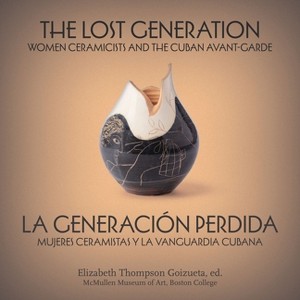
"La generaciâon perdida: mujeres ceramistas y la vanguardia cubana examina a los participantes y la producciâon artâistica del Taller de Santiago de las Vegas entre 1949 y 1959, un taller de cerâamica en las afueras de La Habana. Fue esta una dâecada de experimentaciâon artâistica de un grupo de mujeres ceramistas poco conocidas, que alcanzâo profundas resonancias por la aceptaciâon de la cerâamica como arte en Cuba y por la relaciâon simbiâotica que floreciâo entre ceramistas y los pintores, casi todos hombres, que visitaron el Taller para aprender nuevas destrezas. Por su parte, y como resultado de estas experiencias, los pintores aplicaron nuevas tâecnicas y metodologâias a su producciâon bidimensional, esa que hoy consideramos representativa de la vanguardia cubana"--
Book Synopsis
An examination of the balance between modernity and tradition in Cuba's turn-of-the-century artistic evolution.
The Lost Generation La generación perdida accompanies an exhibition of the same name at the McMullen Museum of Art, Boston College. The modern artistic ceramic movement in Cuba, almost exclusively comprised of women artists (including Amelia Peláez, Mirta García Buch, and María Elena Jubrías), emerged toward the end of the 1940s and continued into the next decade. The ceramicists invited Cuba's modernist protagonists, including René Portocarrero, Luis Martínez Pedro, and Wifredo Lam, to participate in designing ceramics at the Taller de Santiago de Las Vegas. The workshop thus became a locus for the fermentation of Cuban modernist expression.
Juan Miguel Rodríguez de la Cruz, the workshop's proprietor, recognized the artistic value of the ceramicists' production and he, along with the women he hired, encouraged collaboration with their male contemporaries. A symbiotic artistic practice grew in which the ceramicists introduced ideas and designs to the painters, whose fledgling attempts in ceramics took eventual flight. As the painters' familiarity with the new medium grew, similar forms appeared in their two-dimensional renderings, which are now synonymous with Cuban modernism.
During the post-Revolutionary period of 1959-85, the Taller became part of Cuba's National Patrimony, continuing the tradition of producing serial and artistic pieces. As the Revolutionary regime wore on, the Taller's importance waned, artists left Cuba, and independent workshops flourished. While the Taller de Santiago no longer boasts importance in artistic production today, it left an indelible mark on Cuban modernism.
With essays by Cuban, American, and Cuban-American scholars, The Lost Generation La generación perdida provides a background on the twentieth-century avant-garde movements in Cuba; delves into the narrative of an overlooked group of Cuban women ceramicists, assessing the implications of their work on modernism; and, finally, explores in depth the women artists of the third avant-garde generation (1949-58).
About the Author
Elizabeth Thompson Goizueta teaches Hispanic studies and Latin American and Peninsular art, culture, and literature at Boston College. At the McMullen Museum, she has curated exhibitions on Wifredo Lam, Esteban Lisa, Roberto Matta, Mariano Rodríguez, Rafael Soriano, and the Cuenca abstractionists.
Shipping details
Return details
Frequently bought together






Trending Non-Fiction






Discover more options