Sponsored
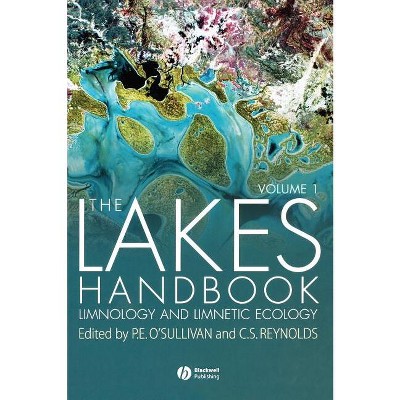
The Lakes Handbook, Volume 2 - by Patrick O'Sullivan & C S Reynolds Hardcover
In Stock
Sponsored
About this item
Highlights
- Continuing concern about water supply and quality, ecosystem sustainability and restoration demands that the modern approach to the management of lakes and reservoirs should be based on a sound understanding of the application of the scientific and ecological principles that underlie freshwater processes.
- About the Author: Patrick O'Sullivan was formerly Principal Lecturer in Environmental Science at the University of Plymouth, UK.
- 572 Pages
- Science, Life Sciences
Description
Book Synopsis
Continuing concern about water supply and quality, ecosystem sustainability and restoration demands that the modern approach to the management of lakes and reservoirs should be based on a sound understanding of the application of the scientific and ecological principles that underlie freshwater processes.
The Lakes Handbook provides an up-to-date overview of the application of ecologically sound approaches, methods and tools using experience gained around the world for an understanding of lakes and their management. Volume one of the Handbook addresses the physical and biological aspects of lakes pertinent to lake management, emphasising those aspects particularly relevant to large, still bodies of water. Volume two then considers lake management, with particular emphasis on sustainability, restoration and rehabilitation.
This handbook will be invaluable to ecologists, environmental scientists, physical geographers and hydrologists involved in limnological research, as well as advanced undergraduate and graduate students looking for authoritative reviews of the key areas of limnological study.
From the Back Cover
Continuing concern about water supply and quality, ecosystem sustainability and restoration demands that the modern approach to the management of lakes and reservoirs should be based on a sound understanding of the application of the scientific and ecological principles that underlie freshwater processes.
The Lakes Handbook provides an up-to-date overview of the application of ecologically sound approaches, methods and tools using experience gained around the world for an understanding of lakes and their management. Volume one of the Handbook addresses the physical and biological aspects of lakes pertinent to lake management, emphasising those aspects particularly relevant to large, still bodies of water. Volume two then considers lake management, with particular emphasis on sustainability, restoration and rehabilitation.
This handbook will be invaluable to ecologists, environmental scientists, physical geographers and hydrologists involved in limnological research, as well as advanced undergraduate and graduate students looking for authoritative reviews of the key areas of limnological study.
Review Quotes
"In this length-constrained review, it is simply impossible to do justice to a volume of such detail, scope and importance. While much of it is too specialized to serve as a stand-alone introductory text for the uninitiated (certainly more so than Volume 1), I suspect that this volume's appeal may be greater, given its strong applied focus. It promises a great deal for postgraduates commencing studies on lacustrine systems. No serious contemporary lake limnologist can afford to go without this volume. It is a must-have, and I anticipate frequent returns to my inspection copy of it." (African Journal of Aquatic Science, 2007)
"...The Lakes Handbook is a valuable contribution to the understanding of limnology, a science poorly-supported by definitive texts and is highly recommended!" Environews, Southern Africa
"This book is well organized and contains a wealth of information on lake restoration and rehabilitation...this is an excellent book and addresses its title very well." Environmental Conservation, February 2006
About the Author
Patrick O'Sullivan was formerly Principal Lecturer in Environmental Science at the University of Plymouth, UK. His research was mainly been conducted into the development through time of lake-watershed ecosystems, and the reconstruction of lake ontogenies using palaeolimnological and documentary proxy records. Throughout his teaching career, he concentrated on development of interdisciplinary programmes in Environmental Science, and the interface between the scientific understanding of human impact upon natural processes in lakes, and the economic and philosophical ideas which lie behind the solutions to 'environmental' problems.
Colin Reynolds is an Honorary Research Fellow of the Freshwater Biological Association and the Centre of Ecology and Hydrology. Much of his career was spent at The Ferry House Laboratory on the shores of Windermere, where his work was directed towards the ecology and dynamics of phytoplankton, in lakes, rivers and reservoirs. He has published over 220 research papers, two books and edited or co-edited several others. He won the International Prize in Limnetic Ecology in 1994 and, in 2001, was awarded the Naumann-Thienemann medal of SIL, the International Association for Limnology.
Shipping details
Return details
Trending Non-Fiction






Discover more options