Sponsored
In Stock
Sponsored
About this item
Highlights
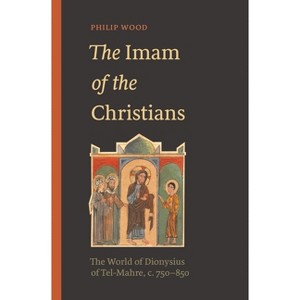
- How Christian leaders adapted the governmental practices and political thought of their Muslim rulers in the Abbasid caliphate The Imam of the Christians examines how Christian leaders adopted and adapted the political practices and ideas of their Muslim rulers between 750 and 850 in the Abbasid caliphate in the Jazira (modern eastern Turkey and northern Syria).
- About the Author: Philip Wood is Professor of History at Aga Khan University's Institute for the Study of Muslim Civilisations in London.
- 304 Pages
- Religion + Beliefs, History
Description
About the Book
"This book considers how Christians adopted the governmental practices and political thought of their Muslim rulers. It explores how this encounter produced an Islamicate Christianity, that differed from the Christianities of Byzantium and western Europe in far more than just theology. It focuses on the history of the Jacobite patriarch of Antioch, Dionysius of Tel-Mahre, and examines the Jazira in the century after the Abbasid Revolution (750-850). It argues that the Abbasid period saw the higher clergy able to command increased powers over their co-religionists, such as issuing canons to regulate the lives of laymen, gathering tithes and arresting Christian opponents. Dionysius' historical writing advertises the patriarch's savoir-faire as he interacts with the court of Abdallah in Raqqa or the caliph al-Ma'mun in Baghdad. It presents him as an effective advocate for the interests of his co-religionists through his knowledge of Arabic and his ability to redeploy Islamic ideas to his own advantage. Strikingly, he observes that both he and al-Ma'mun are imams, since they lead their people in prayer and rule by popular consensus. On this basis, he claims, the caliph should support his leadership in order to guarantee the social order of the caliphate. The Imam of the Christians offers Dionysius' history as a window into the world of early Islam, and as an example more generally of how a powerful worldview can set the parameters by which other worldviews operate"--
Book Synopsis
How Christian leaders adapted the governmental practices and political thought of their Muslim rulers in the Abbasid caliphate
The Imam of the Christians examines how Christian leaders adopted and adapted the political practices and ideas of their Muslim rulers between 750 and 850 in the Abbasid caliphate in the Jazira (modern eastern Turkey and northern Syria). Focusing on the writings of Dionysius of Tel-Mahre, the patriarch of the Jacobite church, Philip Wood describes how this encounter produced an Islamicate Christianity that differed from the Christianities of Byzantium and western Europe in far more than just theology. In doing so, Wood opens a new window on the world of early Islam and Muslims' interactions with other religious communities.
Wood shows how Dionysius and other Christian clerics, by forging close ties with Muslim elites, were able to command greater power over their coreligionists, such as the right to issue canons regulating the lives of lay people, gather tithes, and use state troops to arrest opponents. In his writings, Dionysius advertises his ease in the courts of ʿAbd Allah ibn Tahir in Raqqa and the caliph al-Ma'mun in Baghdad, presenting himself as an effective advocate for the interests of his fellow Christians because of his knowledge of Arabic and his ability to redeploy Islamic ideas to his own advantage. Strikingly, Dionysius even claims that, like al-Ma'mun, he is an imam since he leads his people in prayer and rules them by popular consent.
A wide-ranging examination of Middle Eastern Christian life during a critical period in the development of Islam, The Imam of the Christians is also a case study of the surprising workings of cultural and religious adaptation.
Review Quotes
"Wood's careful, fine-grained analysis of Dionysius and his world provides a fascinating glimpse at one Christian community in the Abbasid caliphate."---John Tolan, The Journal of Religion
"The book greatly contributes to our understanding of Abbasid era politics and the situation of religious minorities."---Usman Butt, The New Arab
About the Author
Philip Wood is Professor of History at Aga Khan University's Institute for the Study of Muslim Civilisations in London. He is the author of The Chronicle of Seert: Christian Historical Imagination in Late Antique Iraq and We Have No King but Christ: Christian Political Thought in Greater Syria on the Eve of the Arab Conquest, c. 400-585. Twitter @DrPhilipWood
Shipping details
Return details
Frequently bought together






Trending Non-Fiction






Discover more options