Sponsored
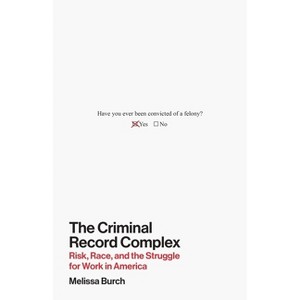
The Criminal Record Complex - by Melissa Burch Hardcover
In Stock
Sponsored
About this item
Highlights
- How a convergence of policy, law, and profit drives the use of criminal background checks in hiring Most employers in the United States routinely conduct criminal background checks on job applicants, weeding out those with criminal convictions--and thus denying opportunities to those who need them most.
- About the Author: Melissa Burch is Assistant Professor of Anthropology at the University of Michigan and Director of the Afterlives of Conviction Project.
- 248 Pages
- Social Science, Criminology
Description
Book Synopsis
How a convergence of policy, law, and profit drives the use of criminal background checks in hiring
Most employers in the United States routinely conduct criminal background checks on job applicants, weeding out those with criminal convictions--and thus denying opportunities to those who need them most. In this powerful analysis, Melissa Burch sheds light on one of the most significant forces of social and economic marginalization of our time--discrimination on the basis of criminal records. Chronicling the daily interactions of hiring managers, workforce development professionals, and job-seekers with felony convictions in Southern California, Burch shows that this discrimination is not simply a matter of employer bias. Hiring is shaped by a set of institutions, organizations, and industries that promote the erroneous idea that people with criminal records are dangerous to employ. This "criminal record complex," as Burch names it, encourages exclusion and undermines employers' common-sense ways of assessing candidates. In vivid and intimate detail, Burch reveals both the futility and devastating human consequences of discriminatory policies.
Burch places today's routine practice of background screening within racialized notions of risk originating in early capitalist development, tracing how, over decades, criminal background checks became a convenient catch-all, leveraged by entities with a direct interest in growing the practice. Despite this reach, however, Burch discovers that small business owners tend to put less value on background checks, trusting their own judgment. Approaching the issue from both personal and policy perspectives, The Criminal Record Complex upends what we thought we knew about the causes of criminal record discrimination. It suggests that our best hope for creating safe workplaces lies not in the false promise of background screening, but in building the kinds of economies and communities that support true safety.
Review Quotes
"[Burch] makes a compelling case that the use of criminal background checks in the United States 'exacerbates inequalities along lines of class, race and gender.' And that, contrary to conventional wisdom, felony convictions are not an effective way to identify productive, reliable employees."---Glenn C. Altschuler, Florida Courier
About the Author
Melissa Burch is Assistant Professor of Anthropology at the University of Michigan and Director of the Afterlives of Conviction Project.
Shipping details
Return details
Frequently bought together





Trending Non-Fiction