Sponsored
In Stock
Sponsored
About this item
Highlights
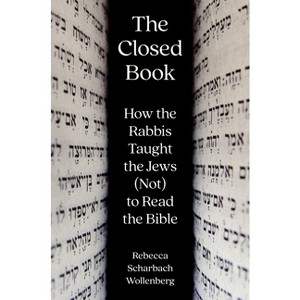
- A groundbreaking reinterpretation of early Judaism, during the millennium before the study of the Bible took center stage Early Judaism is often described as the religion of the book par excellence--a movement built around the study of the Bible and steeped in a culture of sacred bookishness that evolved from an unrelenting focus on a canonical text.
- About the Author: Rebecca Scharbach Wollenberg is assistant professor of Judaic studies at the University of Michigan.
- 272 Pages
- Religion + Beliefs, Judaism
Description
Book Synopsis
A groundbreaking reinterpretation of early Judaism, during the millennium before the study of the Bible took center stage
Early Judaism is often described as the religion of the book par excellence--a movement built around the study of the Bible and steeped in a culture of sacred bookishness that evolved from an unrelenting focus on a canonical text. But in The Closed Book, Rebecca Scharbach Wollenberg argues that Jews didn't truly embrace the biblical text until nearly a thousand years after the Bible was first canonized. She tells the story of the intervening centuries during which even rabbis seldom opened a Bible and many rabbinic authorities remained deeply ambivalent about the biblical text as a source of sacred knowledge.
Wollenberg shows that, in place of the biblical text, early Jewish thinkers embraced a form of biblical revelation that has now largely disappeared from practice. Somewhere between the fixed transcripts of the biblical Written Torah and the fluid traditions of the rabbinic Oral Torah, a third category of revelation was imagined by these rabbinic thinkers. In this "third Torah," memorized spoken formulas of the biblical tradition came to be envisioned as a distinct version of the biblical revelation. And it was believed that this living tradition of recitation passed down by human mouths, unbound by the limitations of written text, provided a fuller and more authentic witness to the scriptural revelation at Sinai. In this way, early rabbinic authorities were able to leverage the idea of biblical revelation while quarantining the biblical text itself from communal life.
The result is a revealing reinterpretation of "the people of the book" before they became people of the book.
Review Quotes
"Carefully documented and closely argued."---Stefan C. Reif, Journal for theStudy of the Old Testament
"A sophisticated and significant contribution."---Mika Ahuvia, The Catholic Bible Quarterly
"Wollenberg . . . deserves praise for highlighting rabbinic views that are often glossed over and for her novel readings of various Talmudic narratives that suggest the rabbis viewed written scripture as flawed."-- "Choice"
About the Author
Rebecca Scharbach Wollenberg is assistant professor of Judaic studies at the University of Michigan.
Shipping details
Return details
Frequently bought together



Trending Non-Fiction




Discover more options