Sponsored
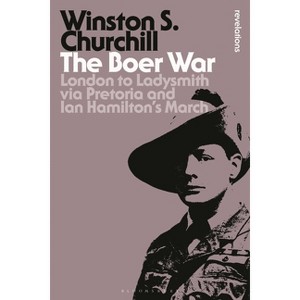
The Boer War - Bloomsbury Revelations by Winston S Churchill & Winston S Churchill Paperback
In Stock
Sponsored
About this item
Highlights
- On October 11th, 1899 long-simmering tensions between Britain and the Boer Republics - the Orange Free State and the Transvaal Republic - finally erupted into the conflict that would become known as the Second Boer War.
- About the Author: Sir Winston Churchill (1874-1965) was Prime Minister of the United Kingdom on two occasions, from 1940 to 1945 and again from 1951-1955.
- 392 Pages
- History, Europe
- Series Name: Bloomsbury Revelations
Description
About the Book
"First published in Great Britain as London to Ladysmith and Ian Hamilton's March by Longmans, Green in 1900 This edition first published by Leo Cooper in 1989, reissued by Pimlico 2002."
Book Synopsis
On October 11th, 1899 long-simmering tensions between Britain and the Boer Republics - the Orange Free State and the Transvaal Republic - finally erupted into the conflict that would become known as the Second Boer War. Two days after the first shots were fired, a young writer by the name of Winston Churchill set out for South Africa to cover the conflict for the Morning Post.
The Boer War brings together the two collections of despatches that Churchill published on the conflict. London to Ladysmith recounts the future Prime Minister's arrival in South Africa and his subsequent capture by and dramatic escape from the Boers, the adventure that first brought the name of Winston Churchill to public attention. Ian Hamilton's March collects Churchill's later despatches as he marched alongside a column of the main British army from Bloemfontein to Pretoria. Published together, these books are a vivid eye-witness account of a landmark period in British Imperial History and an insightful chronicle of a formative experience by Britain's greatest war-time leader.
About the Author
Sir Winston Churchill (1874-1965) was Prime Minister of the United Kingdom on two occasions, from 1940 to 1945 and again from 1951-1955. Celebrated as one of the greatest wartime leaders of the 20th Century, he was also a gifted orator, statesman and historian. He was awarded the Nobel Prize for Literature in 1953.
Shipping details
Return details
Frequently bought together
Trending Non-Fiction