Sponsored
In Stock
Sponsored
About this item
Highlights
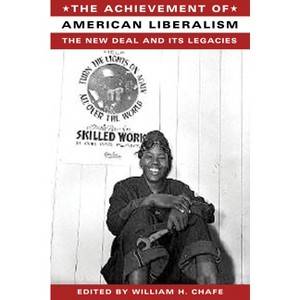
- The New Deal established the contours and character of modern American democracy.
- About the Author: William H. Chafe is dean of the faculty of Arts and Sciences and Alice Mary Baldwin Professor of History at Duke University.
- 350 Pages
- History, United States
Description
About the Book
Alan Brinkley, Melvin Urofsky, Harvard Sitkoff, and other leading scholars explore the liberal tradition in American politics, culture, and social relations.
Book Synopsis
The New Deal established the contours and character of modern American democracy. It created an anchor and a reference point for American liberal politics through the struggles for racial, gender, and economic equality in the five decades that followed it. Indeed, the ways that liberalism has changed in meaning since the New Deal provide a critical prism through which to understand twentieth-century politics. From the consensus liberalism of the war years to the strident liberalism of the sixties to the besieged liberalism of the eighties and through the more recent national debates about welfare reform and Social Security privatization, the prominent historians gathered here explore the convoluted history of the complex legacy of the New Deal and its continuing effect on the present.
In its scope and variety of subjects, this book reflects the protean quality of American liberalism. Alan Brinkley focuses on the range of choices New Dealers faced. Alonzo Hamby traces the Democratic Party's evolving effort to incorporate New Deal traditions in the Cold War era. Richard Fried offers a fresh look at the impact of McCarthyism. Richard Polenberg situates Robert Oppenheimer, the father of the atomic bomb, in a tradition of liberal thought. And Melvin Urosfsky shows how the Roosevelt Court set the legal dimensions within which the debate about the meaning of liberalism would be conducted for decades. Other subjects include the effect of the Holocaust on relations between American Jews and African Americans; the limiting effects of racial and gender attitudes on the potential for meaningful reform; and the lasting repercussions of the tumultuous 1960s.
Provocative, illuminating and sure to raise questions for future study, The Achievement of American Liberalism testifies to a vibrant and vital field of inquiry.
Review Quotes
Chafe's own essays... are excellent models for how historians and other scholars might effectively come to grips with elements of the New Deal, liberalism, and thier legacies.-- "New Deal"
The essays collected in this tribute to William E. Leuchtenburg survey the arc of American liberalism... effective and accomplished pieces.--Robert C. Lieberman "Journal of American History"
These pieces range from good to excellent.-- "Library Journal"
This book ranks among the most significant efforts to understand the long-term impact of the New Deal on American Politics and society. The eleven essays herein will be welcomed for their insightful commentaries on wide-ranging aspects of the 1930s liberal legacy that were to shape the American political experience for the remainder of the twentieth century.... Both in its contribution to understanding twentieth-century political history and contemporary America, this study will become established as a standard work on its subject.--Iwan Morgan "Journal of American Studies"
This book will be useful for those seeking an understanding of US politics over the last decades of the 20th century.--J.P. Sanson "Choice"
About the Author
William H. Chafe is dean of the faculty of Arts and Sciences and Alice Mary Baldwin Professor of History at Duke University. He is the author of many books including The Unfinished Journey: America Since World War II.
Shipping details
Return details
Trending Non-Fiction





Discover more options