Sponsored
In Stock
Sponsored
About this item
Highlights
- How rhetorical training influenced deeds as well as words in the Roman Empire The assassins of Julius Caesar cried out that they had killed a tyrant, and days later their colleagues in the Senate proposed rewards for this act of tyrannicide.
- About the Author: J. E. Lendon is Professor of History at the University of Virginia.
- 328 Pages
- History, Ancient
Description
Book Synopsis
How rhetorical training influenced deeds as well as words in the Roman Empire
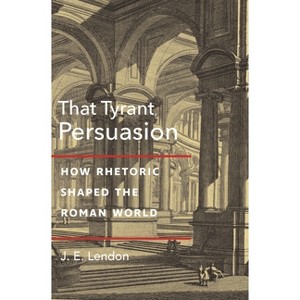
The assassins of Julius Caesar cried out that they had killed a tyrant, and days later their colleagues in the Senate proposed rewards for this act of tyrannicide. The killers and their supporters spoke as if they were following a well-known script. They were. Their education was chiefly in rhetoric and as boys they would all have heard and given speeches on a ubiquitous set of themes--including one asserting that "he who kills a tyrant shall receive a reward from the city." In That Tyrant, Persuasion, J. E. Lendon explores how rhetorical education in the Roman world influenced not only the words of literature but also momentous deeds: the killing of Julius Caesar, what civic buildings and monuments were built, what laws were made, and, ultimately, how the empire itself should be run.
Presenting a new account of Roman rhetorical education and its surprising practical consequences, That Tyrant, Persuasion shows how rhetoric created a grandiose imaginary world for the Roman ruling elite--and how they struggled to force the real world to conform to it. Without rhetorical education, the Roman world would have been unimaginably different.
Review Quotes
"That Tyrant, Persuasion. . . breaks new ground by tracing the influence of rhetoric on public life. . . . drawing on vast erudition, Lendon writes beautifully. He deserves to be widely read."---Brian Vickers, Times Literary Supplement
"A delightful and stimulating book. . . . A crisp and propulsive read."---Catherine Steel, Sehepunkte
"A scholarly, balanced, and stimulating study."---R. T. Ingoglia, Choice
"A Times Literary Supplement Book of the Year"
"Witty and frank."---Christopher Farnese, New England Classical Review
About the Author
J. E. Lendon is Professor of History at the University of Virginia. He is the author of Song of Wrath: The Peloponnesian War Begins; Soldiers and Ghosts: A History of Battle in Classical Antiquity; and Empire of Honour: The Art of Government in the Roman World.
Shipping details
Return details
Frequently bought together

Trending Non-Fiction





Discover more options