The contributions of the black population to the history and economic development of Puerto Rico have long been distorted and underplayed, Luis A. Figueroa contends.
Author(s): Luis A Figueroa
304 Pages
History, Caribbean & West Indies
Description
About the Book
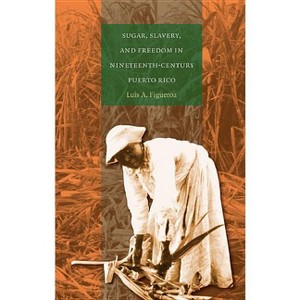
Sugar, Slavery, and Freedom in Nineteenth-Century Puerto Rico
Book Synopsis
The contributions of the black population to the history and economic development of Puerto Rico have long been distorted and underplayed, Luis A. Figueroa contends. Focusing on the southeastern coastal region of Guayama, one of Puerto Rico's three leading centers of sugarcane agriculture, Figueroa examines the transition from slavery and slave labor to freedom and free labor after the 1873 abolition of slavery in colonial Puerto Rico. He corrects misconceptions about how ex-slaves went about building their lives and livelihoods after emancipation and debunks standing myths about race relations in Puerto Rico.
Historians have assumed that after emancipation in Puerto Rico, as in other parts of the Caribbean and the U.S. South, former slaves acquired some land of their own and became subsistence farmers. Figueroa finds that in Puerto Rico, however, this was not an option because both capital and land available for sale to the Afro-Puerto Rican population were scarce. Paying particular attention to class, gender, and race, his account of how these libertos joined the labor market profoundly revises our understanding of the emancipation process and the evolution of the working class in Puerto Rico.
Review Quotes
"Sugar, Slavery, and Freedom in Nineteenth-Century Puerto Rico has opened a new window from which to peer into the underexplored social, economic, and political world of the enslaved and libertas/os." -- Colonial Latin American Historical Review
"An incredibly well-researched study. . . . Students and scholars of the Atlantic World . . . will benefit." -- The Latin Americanist
"Compelling. . . . Clearly provides important evidence to the hypothesis on racial/class exclusion of black Puerto Ricans." -- CENTRO Journal
"Provides a richer and more complex portrait of the rural and urban coastal proletariat in Puerto Rico. . . . Should be compulsory reading for anyone interested in the study of slavery, emancipation, race relations, and the relationship between race and national formation in the Americas." -- Journal of Colonialism and Colonial History
"This study enriches our understanding of topics long overlooked within both the island and the region's historiography." -- The Americas
"This well written story of Guayama's slavery and post-emancipation experience fulfills expectations. It not only enhances our understanding of the regional map of sugar and slavery in nineteenth-century Puerto Rico, but is a welcome invitation to overcome the vague depiction of slavery and its aftermath that still prevails in the memory of the people of this island." -- New West Indian Guide
Dimensions (Overall): 9.28 Inches (H) x 6.06 Inches (W) x .74 Inches (D)
Weight: 1.0 Pounds
Suggested Age: 22 Years and Up
Number of Pages: 304
Genre: History
Sub-Genre: Caribbean & West Indies
Publisher: University of North Carolina Press
Theme: General
Format: Paperback
Author: Luis A Figueroa
Language: English
Street Date: November 21, 2005
TCIN: 88977156
UPC: 9780807856109
Item Number (DPCI): 247-57-0343
Origin: Made in the USA or Imported
If the item details aren’t accurate or complete, we want to know about it.
Shipping details
Estimated ship dimensions: 0.74 inches length x 6.06 inches width x 9.28 inches height
Estimated ship weight: 1 pounds
We regret that this item cannot be shipped to PO Boxes.
This item cannot be shipped to the following locations: American Samoa (see also separate entry under AS), Guam (see also separate entry under GU), Northern Mariana Islands, Puerto Rico (see also separate entry under PR), United States Minor Outlying Islands, Virgin Islands, U.S., APO/FPO
Return details
This item can be returned to any Target store or Target.com.
This item must be returned within 90 days of the date it was purchased in store, shipped, delivered by a Shipt shopper, or made ready for pickup.