In the mid-1920s, Uzbekistan's countryside experienced a 'land reform', which aimed at solving rural poverty and satisfying radical fringes among peasants and Party, while sustaining agricultural output, especially for cotton.
About the Author: Dr Beatrice Penati is Senior Lecturer in Russian and Eurasian History at the University of Liverpool.
690 Pages
History, Asia
Series Name: Handbook of Oriental Studies. Section 8 Uralic & Central Asi
Description
About the Book
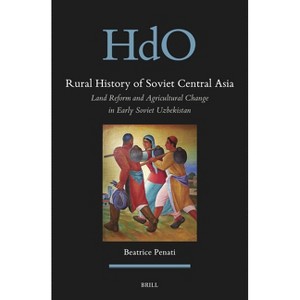
This book explains how the new Soviet regime in Uzbekistan balanced political priorities, budgetary constraints, and peasant demands to grapple with Tsarist legacies, alleviate rural poverty through land reform, and achieve quick economic recovery, starting from the cotton sector.
Book Synopsis
In the mid-1920s, Uzbekistan's countryside experienced a 'land reform', which aimed at solving rural poverty and satisfying radical fringes among peasants and Party, while sustaining agricultural output, especially for cotton. This book analyses the decision-making process underpinning the reform, its implementation, and economic and social effects. The reform must be understood against the background of the wreckage caused by war and revolution, and linked to subsequent policies of 'land organisation' and regime-sponsored 'class struggle'. Overall, this is the first comprehensive account of early Soviet policy in Central Asia's agricultural heartland, encompassing land rights, irrigation, credit, resettlement, and the co-operative system.
Review Quotes
From the peer review reports: "This book is the result of masterful research. It will become a milestone in studies of the economic and social history of modern Central Asia and for studies of agricultural policies during the New Economic Policy in the Soviet Union more broadly." - Niccolò Pianciola, University of Padua "This volume is a much needed and appreciated contribution to the fields of Central Asian history and Soviet history, but will also surely be welcomed and prized by economic historians, and historians of agriculture, labour or social relations with comparative interests in Eurasia and the Middle East." - Flora Roberts, Assistant Professor of Environmental History, Utrecht University
About the Author
Dr Beatrice Penati is Senior Lecturer in Russian and Eurasian History at the University of Liverpool. She has published widely on the history of taxation, cotton, economic policy, and resources use in Tsarist and early Soviet Central Asia.
Dimensions (Overall): 9.39 Inches (H) x 6.47 Inches (W) x 1.66 Inches (D)
Weight: 2.52 Pounds
Suggested Age: 22 Years and Up
Number of Pages: 690
Genre: History
Sub-Genre: Asia
Series Title: Handbook of Oriental Studies. Section 8 Uralic & Central Asi
Publisher: Brill
Theme: General
Format: Hardcover
Author: Beatrice Penati
Language: English
Street Date: December 12, 2024
TCIN: 1007043155
UPC: 9789004697775
Item Number (DPCI): 247-36-2839
Origin: Made in the USA or Imported
If the item details aren’t accurate or complete, we want to know about it.
Shipping details
Estimated ship dimensions: 1.66 inches length x 6.47 inches width x 9.39 inches height
Estimated ship weight: 2.52 pounds
We regret that this item cannot be shipped to PO Boxes.
This item cannot be shipped to the following locations: American Samoa (see also separate entry under AS), Guam (see also separate entry under GU), Northern Mariana Islands, Puerto Rico (see also separate entry under PR), United States Minor Outlying Islands, Virgin Islands, U.S., APO/FPO
Return details
This item can be returned to any Target store or Target.com.
This item must be returned within 90 days of the date it was purchased in store, shipped, delivered by a Shipt shopper, or made ready for pickup.