Sponsored
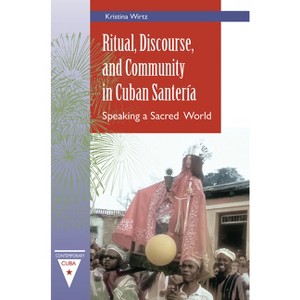
Ritual, Discourse, and Community in Cuban Santería - (Contemporary Cuba) by Kristina Wirtz (Paperback)
Out of Stock
Sponsored
About this item
Highlights
- Examining the religious lives of Santería practitioners in Santiago de Cuba, this book explores how practitioners of different backgrounds create and maintain religious communities.
- Author(s): Kristina Wirtz
- 280 Pages
- Social Science, Anthropology
- Series Name: Contemporary Cuba
Description
About the Book
Examining the religious lives of Santería practitioners in Santiago de Cuba, this book explores how practitioners of different backgrounds create and maintain religious communities.
Book Synopsis
Examining the religious lives of Santería practitioners in Santiago de Cuba, this book explores how practitioners of different backgrounds create and maintain religious communities.
Review Quotes
"Wirtz's
lucid and intimate ethnography of Santería practice in Santiago de Cuba
addresses classic debates in the study of religions and African-derived
cultures in the Americas.. . . . A rewarding, tightly structured read."--Caribbean
Studies
"The
reader comes away with a vivid sense of the complexities of the historical emergence
of Santería, of the competing agendas of Santería's ritual experts at this
historical moment, of the distillation of relatively stable religious stances
through moment-to-moment activities and discourse, and of the intimate
interplay between the divine and the all too human."--Journal of
Linguistic Anthropology
"A
sympathetic and detailed ethnography of a religious community. . . . A fine
book for scholars interested in cultural theory and the construction of
religious communities."--Nova Religio
"Wirtz
brings . . . a background in ecology and evolutionary theory that, combined
with her expertise in linguistic anthropology, give her descriptions of
discursive competition as a path to religious survival a rare prescience and
urgency."--Journal of Anthropological Research
"Wirtz's
attention to the socially constitutive force of reflective discourse and her
detailed ethnography suggest new directions for the study of Santería and
religion."--Journal of Latin American and Caribbean Anthropology
Shipping details
Return details
Frequently bought together
Trending Non-Fiction




Discover more options