Sponsored
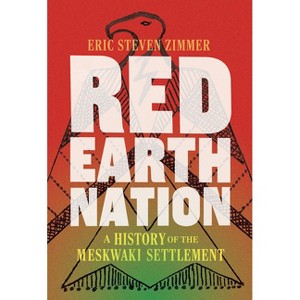
Red Earth Nation - (Environment in Modern North America) by Eric Steven Zimmer
In Stock
Sponsored
About this item
Highlights
- In 1857, the Meskwaki Nation purchased an eighty-acre parcel of land along the Iowa River.
- Author(s): Eric Steven Zimmer
- 358 Pages
- History, Native American
- Series Name: Environment in Modern North America
Description
About the Book
Revealing how the Red Earth People have negotiated shifting environmental, economic, and political circumstances to rebuild in the face of incredible pressures, Red Earth Nation shows that with their first, eighty-acre land purchase in the 1850s, Meskwaki leaders initiated a process that is still under way.
Book Synopsis
In 1857, the Meskwaki Nation purchased an eighty-acre parcel of land along the Iowa River. With that modest plot secured as a place to rest and rebuild after centuries of devastation and dispossession, the Meskwaki, or "Red Earth People," began to reclaim their homeland--an effort that Native nations continue to this day in what has recently come to be called the #Landback movement. Red Earth Nation explores the long history of #Landback through the Meskwaki Nation's story, one of the oldest and clearest examples of direct-purchase Indigenous land reclamation in American history.
Spanning Indigenous environmental and political history from the Red Earth People's creation to the twenty-first century, Red Earth Nation focuses on the Meskwaki Settlement: now comprising more than 8,000 acres, this is sovereign Meskwaki land, not a treaty-created reservation. Currently the largest employer in Tama County, Iowa, the Meskwaki Nation has long used its land ownership and economic clout to resist the forces of colonization and create opportunities for self-determination.
But the Meskwaki story is not one of smooth or straightforward progress. Eric Steven Zimmer describes the assaults on tribal sovereignty visited on the Meskwaki Nation by the local, state, and federal governments that surround it. In these instances, the Meskwaki Settlement provided political leverage and an anchor for community cohesion, as generations of Meskwaki deliberately and strategically--though not always successfully--used their collective land ownership to affirm tribal sovereignty and exercise self-determination.
Revealing how the Red Earth People have negotiated shifting environmental, economic, and political circumstances to rebuild in the face of incredible pressures, Red Earth Nation shows that with their first, eighty-acre land purchase in the 1850s, Meskwaki leaders initiated a process that is still under way. Indeed, Native nations across the United States have taken up the #Landback cause, marshaling generations of resistance to reframe the history of Indigenous dispossession to explore stories of reclamation and tribal sovereignty.
Review Quotes
"Eric Steven Zimmer does an excellent job in applying Indigenous methodology to tell the story of the Red Earth People and The Settlement they founded in 1857. He established a good working relationship with the Red Earth People and worked with several Tribal Elders and the Tribal Preservation Officer of the Meskwaki Settlement and tells the story of the Red Earth People from the perspective of the Red Earth People."--Nebraska History
"Red Earth Nation is a comprehensive political history of the Meskwaki Nation that explains how their people responded to colonization, from the Fox Wars of the eighteenth century through the Indian New Deal. Twentieth-century federal interventions caused a great deal of discord. Despite these challenges, the Meskwaki have expanded their land base and defended their sovereignty. Their victories have come in court, through alliances, and through savvy responses to capricious colonizers over time. Red Earth Nation is a welcome addition to the history of the Meskwaki people, and to the Indigenous Midwest more generally."--Western Historical Quarterly
"This clearly written and accessible narrative tells the remarkable story of the Meskwaki, the "Red Earth People," as they call themselves. Red Earth Nation is an important contribution to the history of Native America. It is highly readable and engaging and fully updates the story of the Meskwaki. Zimmer's research is thorough, and he incorporates a wide range of evidence, including oral history, federal records, and archival collections. This is an inspiring story of resilience and survival."--Montana, The Magazine of Western History
"Red Earth Nation tells how the Meskwaki Nation strategically expressed and enacted sovereignty through time and from its unique relationship to land. Eric Zimmer provides a meticulously detailed history of the Meskwaki Nation, guided by and in dialogue with contemporary Meskwaki people. This work of community-engaged scholarship is an important contribution to Indigenous history and Native studies." -- Clint Carroll author of Roots of Our Renewal: Ethnobotany and Cherokee Environmental Governance
"Eric Steven Zimmer delivers a masterful chronicle of the Meskwaki Nation's enduring resilience and its centuries-long quest to reclaim its Iowa homeland. Zimmer's captivating narrative weaves together the tribe's strategic fight for land rights and self-determination, illuminating the indomitable spirit of the Red Earth People. This impeccably researched work stands as a transformative testament to Indigenous resurgence and a powerful triumph of historical storytelling."--Doug Kiel, Associate Professor of History, Northwestern University
"In a meticulously researched, thoughtful, respectful, and smoothly flowing narrative, Eric Zimmer tells the powerful and inspiring story of a Native nation's struggle to reclaim its land and secure its future. A model of publicly engaged scholarship of the highest order and a testament to the Meskwaki people's resiliency and determination to control their destiny, Red Earth Nation deserves the widest possible readership." -- Mark Fiege, Professor of History and Wallace Stegner Chair in Western American Studies, Montana State University and author of Republic of Nature: An Environmental History of the United States
"In addition to contributing a new history of a uniquely situated Native community in the Midwest, this Meskwaki-centric history of federal Indian policy reveals the interplay between powerful external forces and Indigenous adaptation, improvisation, and self-determination."--Larry Nesper, author of "Our Relations . . . the Mixed Bloods" Indigenous Transformation and Dispossession in the Western Great Lakes
Shipping details
Return details
Frequently bought together




Guests also viewed