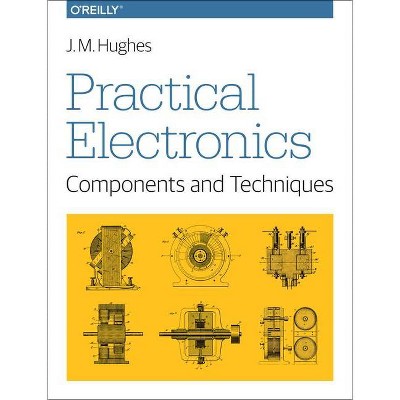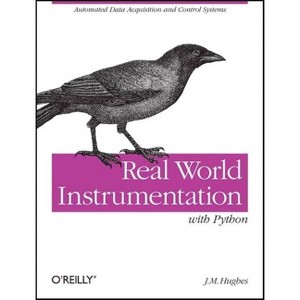
Learn how to develop your own applications to monitor or control instrumentation hardware.
About the Author: John M. Hughes is an embedded systems engineer with over 30 years of experience in electronics, embedded systems and software, aerospace systems, and scientific applications programming.
619 Pages
Computers + Internet, Programming Languages
Description
About the Book
With this convenient, single-source reference, users will learn how to develop instrumentation software with Python that lets them monitor or control devices in the physical world.
Book Synopsis
Learn how to develop your own applications to monitor or control instrumentation hardware. Whether you need to acquire data from a device or automate its functions, this practical book shows you how to use Python's rapid development capabilities to build interfaces that include everything from software to wiring. You get step-by-step instructions, clear examples, and hands-on tips for interfacing a PC to a variety of devices.
Use the book's hardware survey to identify the interface type for your particular device, and then follow detailed examples to develop an interface with Python and C. Organized by interface type, data processing activities, and user interface implementations, this book is for anyone who works with instrumentation, robotics, data acquisition, or process control.
Understand how to define the scope of an application and determine the algorithms necessary, and why it's important
Learn how to use industry-standard interfaces such as RS-232, RS-485, and GPIB
Create low-level extension modules in C to interface Python with a variety of hardware and test instruments
Explore the console, curses, TkInter, and wxPython for graphical and text-based user interfaces
Use open source software tools and libraries to reduce costs and avoid implementing functionality from scratch
About the Author
John M. Hughes is an embedded systems engineer with over 30 years of experience in electronics, embedded systems and software, aerospace systems, and scientific applications programming. He was responsible for the surface imaging software on the Phoenix Mars Lander, and has worked on digital engine control systems for commercial and military aircraft, automated test systems, radio telescope data acquisition, and realtime adaptive optics controls for astronomy. Hughes has been using Python for many years in a variety of applications, including the software for a multiwavelength laser interferometer system for verifying the alignment of telescope mirror segments on the James Webb Space Telescope. He is currently using Python for imaging systems simulation and analysis at the University of Arizona.
Dimensions (Overall): 9.26 Inches (H) x 7.06 Inches (W) x 1.31 Inches (D)
Weight: 1.78 Pounds
Suggested Age: 22 Years and Up
Number of Pages: 619
Genre: Computers + Internet
Sub-Genre: Programming Languages
Publisher: O'Reilly Media
Theme: Python
Format: Paperback
Author: J M Hughes
Language: English
Street Date: December 28, 2010
TCIN: 85124450
UPC: 9780596809560
Item Number (DPCI): 247-54-6486
Origin: Made in the USA or Imported
If the item details aren’t accurate or complete, we want to know about it.
Shipping details
Estimated ship dimensions: 1.31 inches length x 7.06 inches width x 9.26 inches height
Estimated ship weight: 1.78 pounds
We regret that this item cannot be shipped to PO Boxes.
This item cannot be shipped to the following locations: American Samoa (see also separate entry under AS), Guam (see also separate entry under GU), Northern Mariana Islands, Puerto Rico (see also separate entry under PR), United States Minor Outlying Islands, Virgin Islands, U.S., APO/FPO, Alaska, Hawaii
Return details
This item can be returned to any Target store or Target.com.
This item must be returned within 90 days of the date it was purchased in store, delivered to the guest, delivered by a Shipt shopper, or picked up by the guest.