Sponsored
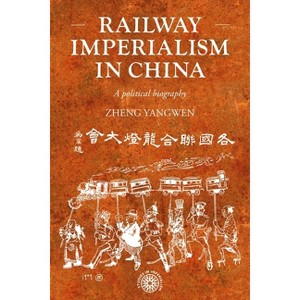
Railway Imperialism in China - (Studies in Imperialism) by Yangwen Zheng (Hardcover)
Pre-order
Sponsored
About this item
Highlights
- Railway imperialism in China: A political biography is the first and most comprehensive book on history and politics of all major railways in China from the late Qing to the post-Mao era.
- About the Author: Zheng Yangwen is Professor of Chinese History at the University of Manchester
- 336 Pages
- History, Asia
- Series Name: Studies in Imperialism
Description
About the Book
This book traces the political genealogy of railways from their introduction in the heyday of railway imperialism to their transformation into a tool for both Chinese nation making and furthering China's global ambition.
Book Synopsis
Railway imperialism in China: A political biography is the first and most comprehensive book on history and politics of all major railways in China from the late Qing to the post-Mao era. It investigates the transformation of railways from a bête noire within discussions about reform to the emblematic "engines for empire" as foreign powers used it to carve out spheres of control, and as an instrument of nation making for Chinese regimes. The book introduces new archival sources and a wide range of secondary materials. Boldly conceived, it situates the making of modern China in the context of British, Russian, German, Japanese, French, Belgium and American expansion. It traces China's metamorphosis from a victim of railway imperialism in the Age of Empire to a railway expansionist in the twenty-first century.
From the Back Cover
Railway imperialism in China charts the political genealogy of railways from their introduction in the heyday of railway imperialism to their transformation into a tool for both Chinese nation making and furthering China's global ambitions. It systematically scrutinizes the intense rivalry among foreign powers that accompanied its introduction and development. Though dismissed by generations of historians as Confucian conservatism, the late Qing's resistance to railways directs us to what are now considered legitimate reasons: their desire to protect the environment and existing socio-economic order.
This book advances a model in the study of railway imperialism, synthesizing how and why railways had become the preferred instrument for empire-making. Treaties had confined foreign powers to a "settlement" in port cities, but railways allowed them to penetrate into the interior, to station troops, to extract resources, and to construct stations which could grow into colonies. More importantly, the book considers both the immediate and long-term legacies of railway imperialism where the CCP has been the ultimate beneficiary. They inherited not just lines built by imperial powers but also their technology and an unfinished vision, which the post-Mao regime has taken further, using railways to conquer the world through the BRI.
This book exploits brand new archival sources and sheds new light on Western and Japanese expansion into and rivalry in the late Qing, and more importantly China's metamorphosis from a victim of railway imperialism to a railway expansionist.
About the Author
Zheng Yangwen is Professor of Chinese History at the University of Manchester
Shipping details
Return details
Frequently bought together




Trending Non-Fiction