Sponsored
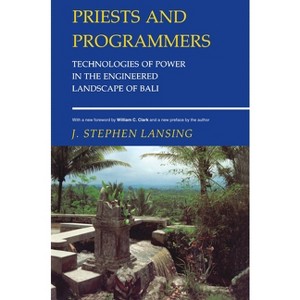
Priests and Programmers - by J Stephen Lansing Paperback
In Stock
Sponsored
About this item
Highlights
- For the Balinese, the whole of nature is a perpetual resource: through centuries of carefully directed labor, the engineered landscape of the island's rice terraces has taken shape.
- About the Author: J. Stephen Lansing is a Professor at the Santa Fe Institute and in the departments of Anthropology and Ecology and Evolutionary Biology at the University of Arizona.
- 216 Pages
- Social Science, Anthropology
Description
Book Synopsis
For the Balinese, the whole of nature is a perpetual resource: through centuries of carefully directed labor, the engineered landscape of the island's rice terraces has taken shape. According to Stephen Lansing, the need for effective cooperation in water management links thousands of farmers together in hierarchies of productive relationships that span entire watersheds.
Lansing describes the network of water temples that once managed the flow of irrigation water in the name of the Goddess of the Crater Lake. Using the techniques of ecological simulation modeling as well as cultural and historical analysis, Lansing argues that the symbolic system of temple rituals is not merely a reflection of utilitarian constraints but also a basic ingredient in the organization of production.
Review Quotes
"Priests and Programmers is written with admirable clarity and should be of interest . . . to anybody working on applied social research."---Michael Hitchcock, Contemporary South Asia
"[A]n enjoyable and stimulating book."---Geoffrey Samuel, Journal of Asian Studies
"[B]rilliant and delightful. . . . [N]ot only has [Lansing] written a superb book, but he has contributed materially and humanely to the quality of life of the people he has studied. Too few scholars can make this claim."---Bryan Pfaffenberger, Technology and Culture
"This is fascinating cultural anthropology, even history of religions."---Edward H. Schroeder, Missiology
About the Author
J. Stephen Lansing is a Professor at the Santa Fe Institute and in the departments of Anthropology and Ecology and Evolutionary Biology at the University of Arizona. He is the author of Perfect Order: Recognizing Complexity in Bali (Princeton).
Shipping details
Return details
Frequently bought together





Trending Non-Fiction





Discover more options