Sponsored
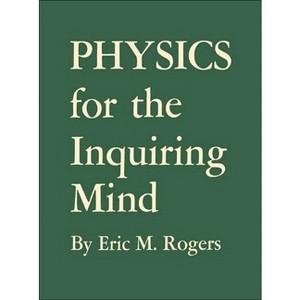
Physics for the Inquiring Mind - by Eric M Rogers (Paperback)
In Stock
Sponsored
About this item
Highlights
- An accessible primer for the physical age A foundational understanding of physics is essential to a well-rounded education, today more than ever.
- About the Author: Eric M. Rogers (1902-1990) was professor emeritus of physics at Princeton University.
- 792 Pages
- Political Science, General
Description
Book Synopsis
An accessible primer for the physical age
A foundational understanding of physics is essential to a well-rounded education, today more than ever. Physics for the Inquiring Mind dispels common misperceptions about physics and explains how to think and reason the way physicists do. First published in 1960 and based on Eric Rogers's popular lectures at Princeton University, this perennial classic continues to offer fresh insights into the nature and methods of science, and to introduce new generations of readers to the thrill of scientific discovery. This delightfully candid book is written with the nonscientist in mind, presenting a carefully selected framework of topics that illustrate how scientific knowledge is cultivated through reading, discussion, and experiment, and how to form one's own opinions and think one's way through scientific problems. It shares a physicist's appreciation for good theory while providing real-world examples of the scientific method at work.
Physics for the Inquiring Mind is a must-read for college students and anyone who wants to learn what physics really is and to grow in scientific wisdom.
Review Quotes
"[T]he author has blended together the history, the philosophy, and the science of physics into a readable, stimulating account of the major fields of physics."---John N. Howard, Applied Optics
"An outstanding text containing numerous demonstration experiments written by one of the 'masters of lecture demonstrations."-- "American Journal of Physics"
About the Author
Eric M. Rogers (1902-1990) was professor emeritus of physics at Princeton University. A renowned science educator, he played a key role in developing new approaches to physics education in British secondary schools in the 1960s.
Shipping details
Return details
Frequently bought together
Trending Non-Fiction






Discover more options