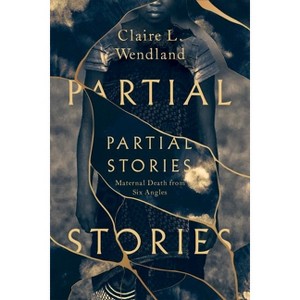
A close look at stories of maternal death in Malawi that considers their implications in the broader arena of medical knowledge.
About the Author: Claire L. Wendland is professor in the Departments of Anthropology and Obstetrics and Gynecology at the University of Wisconsin-Madison.
384 Pages
Medical, Health Care Delivery
Description
About the Book
"Partial Stories takes readers to Malawi, where roughly one in twenty women can expect to die of a pregnancy or childbirth complication, despite decades of safe-motherhood programs. The stories of these mothers are told in hospitals and villages, by chiefs and doctors, herbalists and nurses, epidemiologists and healers, and competing explanations proliferate. The mothers' stories are used by elders for technical education and moral instruction at a coming-of-age-ritual, a district hospital's mortality review, and in the reflected glow of a computer screen at an international conference. After orienting readers to urban Malawi's context of therapeutic pluralism and material scarcity, Claire Wendland discusses the ways various experts account for maternal death, showing how their diverse explanations reflect competing visions of the past and shared concerns about social change. She looks to a series of pregnancy-related deaths in order to consider bodies as biosocial phenomena, shaped from before birth by history and social inequality. Wendland reveals an uneven therapeutic landscape that pushes experts to improvise, clinically and ethically. Their creative, essential, and sometimes deadly improvisations ask us to reconsider the "best practice" dogmas of global health and transnational research, as well as the nature of medical authority and expertise. Wendland demonstrates how strategies of legitimation render care more dangerous and knowledge more partial than it might otherwise be"--
Book Synopsis
A close look at stories of maternal death in Malawi that considers their implications in the broader arena of medical knowledge.
By the early twenty-first century, about one woman in twelve could expect to die of a pregnancy or childbirth complication in Malawi. Specific deaths became object lessons. Explanatory stories circulated through hospitals and villages, proliferating among a range of practitioners: nurse-midwives, traditional birth attendants, doctors, epidemiologists, herbalists. Was biology to blame? Economic underdevelopment? Immoral behavior? Tradition? Were the dead themselves at fault?
In Partial Stories, Claire L. Wendland considers these explanations for maternal death, showing how they reflect competing visions of the past and shared concerns about social change. Drawing on extended fieldwork, Wendland reveals how efforts to legitimate a single story as the authoritative version can render care more dangerous than it might otherwise be. Historical, biological, technological, ethical, statistical, and political perspectives on death usually circulate in different expert communities and different bodies of literature. Here, Wendland considers them together, illuminating dilemmas of maternity care in contexts of acute change, chronic scarcity, and endemic inequity within Malawi and beyond.
Review Quotes
"In an era of global health interventions that - at times - prioritize efficiency over equity, Wendland's work serves as a vital reminder of the importance of context, history, and humanity. Her partial stories illuminate the need for holistic, justice-oriented approaches to maternal health within the broader discourse of global development."-- "Journal of Development Studies"
"The book adeptly presents a large-scale perspective while still returning to an individual woman's life. It's an effective and moving reminder that numbers correspond to real people, and that maternal mortality is ultimately the tragic death of individual women. Wendland's writing doesn't lose sight of these tragedies, and the book is as sensitive and beautiful as it is frank and honest."-- "African Studies Review"
"Partial Stories is an extraordinary accomplishment. It is that rare book that comes along and forever transforms how a perennial social problem is seen and thought about. The study is unmatched in its sheer breadth, and complex and nuanced depth, reflecting the rich experience, expertise, and empathetic knowledge brought to bear by Wendland. This book is a must-read for mortality scholars and maternal health policymakers."-- "Population and Development Review"
"Partial Stories offers a new narrative about maternal death in Africa by undermining 'the notion that any of the single stories we already think we know is definitive.' . . . The care Wendland put into thinking about how to tell the stories she shares is evident throughout." -- "Medical Anthropology Quarterly"
"A well-written, compelling, dynamic narrative that broadens and complicates readers' understanding of the contributing causes and impacts of maternal mortality. . . . Highly recommended."-- "Choice"
"I really enjoyed reading this book. . . . It's a book that, to me, speaks to the reader's humanity at least as much as it speaks to their intellect."-- "New Books Network"
"At last maternal mortality, that raging topic in obstetric, global health, and epidemiology circles, receives the sophisticated, complex, qualitative, and nuanced treatment it has long deserved. By emphasizing partialities and sharing stories, this anthropology offers up an important set of diagnostics about why so many poor, black, African women still die in pregnancy and childbirth, and how these death scenes unfold and what they conceal."--Nancy Rose Hunt, author of A Colonial Lexicon: Of Birth Ritual, Medicalization, and Mobility in the Congo
"Written by an ethnographer and obstetrician, this wide-ranging and comprehensive book offers a much more nuanced picture of maternal deaths and maternal health than much of the literature on critical global health can do--and it does so out of a commitment and an expertise, yet also a humility and curiosity that is often lacking in critical global health scholarship. It fills an important gap."--Ruth Jane Prince, University of Oslo
About the Author
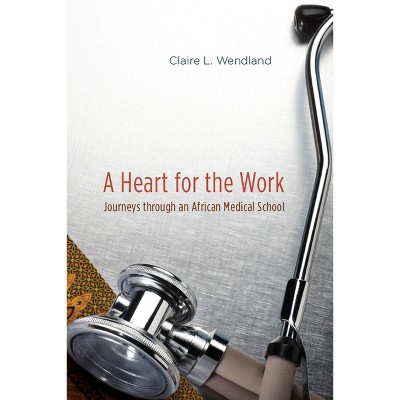
Claire L. Wendland is professor in the Departments of Anthropology and Obstetrics and Gynecology at the University of Wisconsin-Madison. She is the author of A Heart for the Work: Journeys through an African Medical School, the first ethnography of a medical school in the Global South, also published by the University of Chicago Press.
Dimensions (Overall): 9.0 Inches (H) x 6.0 Inches (W) x .81 Inches (D)
Weight: 1.45 Pounds
Suggested Age: 22 Years and Up
Number of Pages: 384
Genre: Medical
Sub-Genre: Health Care Delivery
Publisher: University of Chicago Press
Format: Hardcover
Author: Claire L Wendland
Language: English
Street Date: April 22, 2022
TCIN: 1008784762
UPC: 9780226816869
Item Number (DPCI): 247-28-4915
Origin: Made in the USA or Imported
If the item details aren’t accurate or complete, we want to know about it.
Shipping details
Estimated ship dimensions: 0.81 inches length x 6 inches width x 9 inches height
Estimated ship weight: 1.45 pounds
We regret that this item cannot be shipped to PO Boxes.
This item cannot be shipped to the following locations: American Samoa (see also separate entry under AS), Guam (see also separate entry under GU), Northern Mariana Islands, Puerto Rico (see also separate entry under PR), United States Minor Outlying Islands, Virgin Islands, U.S., APO/FPO
Return details
This item can be returned to any Target store or Target.com.
This item must be returned within 90 days of the date it was purchased in store, shipped, delivered by a Shipt shopper, or made ready for pickup.