Sponsored
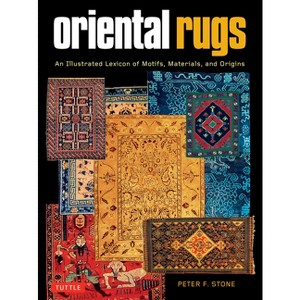
Oriental Rugs - by Peter F Stone (Paperback)
In Stock
Sponsored
About this item
Highlights
- A must-have reference to the highly confusing rug terminology used across the globe--from Morocco to Turkey, Persia and the Caucasus region to Central Asia, India and China!
- About the Author: Peter F. Stone became fascinated with rug structure and began collecting rugs in 1975.
- 320 Pages
- Antiques + Collectibles, Rugs
Description
About the Book
This comprehensive reference work, valued by collectors and scholars, fills a crucial gap in rug and textile literature. It features over 1000 photographs and illustrations, offering clear definitions of terms used for rugs and textiles across regions like Morocco, Turkey, Persia, Central Asia, and more. Covering both priceless museum-quality pieces and modern productions, it blends classical scholarship with contemporary terminology. Focusing on hand-knotting and hand-weaving traditions, especially in the Near East and Central Asia, the book clarifies the often-confusing variety of rug names and terms, explains designs, motifs, and materials, and aids researchers by identifying regional and ethnic characteristics.
Book Synopsis
A must-have reference to the highly confusing rug terminology used across the globe--from Morocco to Turkey, Persia and the Caucasus region to Central Asia, India and China!
This monumental reference work--coveted by collectors and scholars alike--remains to fill an important gap in the available literature. Lavishly illustrated with over 1000 photographs and drawings, it offers clear and precise definitions for the rug and textile terms used across a broad swath of the globe--from Morocco to Turkey, Persia, the Caucasus region, Central Asia, Afghanistan, Pakistan, India and China. It covers priceless museum-quality rugs as well as modern centers of production, and draws on classical scholarship as well as current terms used by producers and traders today. It focuses on the rich hand-knotting and hand-weaving traditions of the Near East and Central Asia, and also includes some Scandinavian and Native American weavings.
Rug terms are confusing; the same rug is often called by a baffling array of different names. Some of these refer to a specific geographic or ethnic origin, while others refer to a particular function, method of production or material. This book makes all these terms accessible and understandable, and aids researchers and collectors by precisely identifying each region and ethnic group and explaining the designs, motifs and materials typically used there. It highlights rugs of particular significance and explains technical terms in use by local producers and traders.
Review Quotes
"Photos are a strength of the book and will inspire artists as well as collectors, interior designers, and scholars. A niche work, enjoyable and useful for public library collections and indispensable for textile scholars and researchers in academic libraries." --Library Journal
"This book is one of a kind and would make a great addition to your interior design book collections." --Jen's Journey blog
"Nothing comparable now exists in the English language." --Walter Denny, University of Massachusetts at Amherst
"Rug names are, most often and very confusing, especially for the novice collector, spelled different depending on the dealer or author. Peter F. Stones book and lexicon fills that gap by providing the most common spellings and alternatives in each paragraph of the lexicon." --Jozan.net
About the Author
Peter F. Stone became fascinated with rug structure and began collecting rugs in 1975. Later, he came to appreciate the artistic and ethnographic aspects of oriental rugs. While serving as president of the Chicago Oriental Rug Society, he began to restore rugs in his collection. He learned oriental rug repair then used his professional skills as an instructional designer to write his first book, Oriental Rug Repair. Other books followed including Rugs of the Caucasus, The Oriental Rug Lexicon, and Tribal & Village Rugs.
The terminology used for oriental rugs is not systematic. In fact, it is extraordinarily confusing. Stone wrote this book to help collectors, trades people, students, researchers, and scholars navigate this terminology maze. There is a growing body of research in rug attribution, technical structures, ethnography, and history. By organizing this information into alphabetical entries, Stone has greatly increased its usefulness for those seeking information about specific rug traditions.
Shipping details
Return details
Frequently bought together


Trending Non-Fiction





Discover more options