Target New ArrivalsGift Ideas for MomClothing, Shoes & AccessoriesHome & DecorKitchen & DiningOutdoor Living & GardenGroceryHousehold EssentialsBabyBeautyPersonal CareHealthWellnessLuggageSports & OutdoorsToysElectronicsVideo GamesMovies, Music & BooksSchool & Office SuppliesParty SuppliesGift IdeasGift CardsPetsUlta Beauty at TargetShop by CommunityTarget OpticalDealsClearanceTarget New ArrivalsSpring OutfitsGift Ideas for MomWomen’s Festival OutfitsTop DealsTarget Circle DealsWeekly AdShop Order PickupShop Same Day DeliveryRegistryRedCardTarget CircleFind Stores
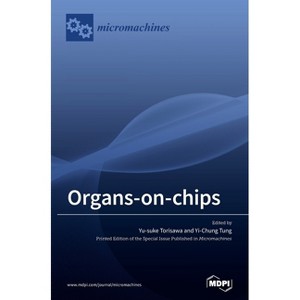
Organs-on-chips - (Hardcover) - 1 of 1

Organs-on-chips - (Hardcover)

$63.99Save $8.51 (12% off)

In Stock

Free & easy returns

Free & easy returns

Return this item by mail or in store within 90 days for a full refund.
Eligible for registries and wish lists

About this item

Highlights

  • Recent advances in microsystems technology and cell culture techniques have led to the development of organ-on-chip microdevices that produce tissue-level functionality, not possible with conventional culture models, by recapitulating natural tissue architecture and microenvironmental cues within microfluidic devices.
  • 262 Pages
  • Technology, General

Description


Book Synopsis


Recent advances in microsystems technology and cell culture techniques have led to the development of organ-on-chip microdevices that produce tissue-level functionality, not possible with conventional culture models, by recapitulating natural tissue architecture and microenvironmental cues within microfluidic devices. Since the physiological microenvironments in living systems are mostly microfluidic in nature, the use of microfluidic devices facilitates engineering cellular microenvironments; the microfluidic devices allow for control of local chemical gradients and dynamic mechanical forces, which play important roles in cellular viability and function. The organ-on-chip microdevices have great potential to promote drug discovery and development, to model human physiology and disease, and to replace animal models for efficacy and toxicity testing. Recently, induced pluripotent stem (iPS) cells have been leveraged to develop organs-on-chips, which enable various types of organ models and disease models not possible with primary cells and cell lines. This Special Issue seeks to showcase research papers, short communications, and review articles that focus on: (1) microdevices to mimic or control cellular microenvironment; (2) microdevices to evaluate interactions between different organ models; (3) microdevices to maintain iPS cells or iPSC-derived cells; and (4) sensors and techniques to evaluate drug efficacy or toxicity.

Dimensions (Overall): 9.61 Inches (H) x 6.69 Inches (W) x .88 Inches (D)
Weight: 1.69 Pounds
Suggested Age: 22 Years and Up
Number of Pages: 262
Genre: Technology
Sub-Genre: General
Publisher: Mdpi AG
Format: Hardcover
Language: English
Street Date: May 27, 2020
TCIN: 1010330819
UPC: 9783039289172
Item Number (DPCI): 247-09-2288
Origin: Made in the USA or Imported
If the item details aren’t accurate or complete, we want to know about it.

Shipping details

Estimated ship dimensions: 0.88 inches length x 6.69 inches width x 9.61 inches height
Estimated ship weight: 1.69 pounds
We regret that this item cannot be shipped to PO Boxes.
This item cannot be shipped to the following locations: American Samoa (see also separate entry under AS), Guam (see also separate entry under GU), Northern Mariana Islands, Puerto Rico (see also separate entry under PR), United States Minor Outlying Islands, Virgin Islands, U.S., APO/FPO, Alaska, Hawaii

Return details

This item can be returned to any Target store or Target.com.
This item must be returned within 90 days of the date it was purchased in store, delivered to the guest, delivered by a Shipt shopper, or picked up by the guest.
See the return policy for complete information.

Q: What types of research does this special issue focus on?

submitted by AI Shopping Assistant - 2 months ago
  • A: It includes studies on cellular microenvironments, organ model interactions, iPS cells, and drug efficacy evaluation techniques.

    submitted byAI Shopping Assistant - 2 months ago
    Ai generated

Q: What technologies do organ-on-chip systems utilize?

submitted by AI Shopping Assistant - 2 months ago
  • A: They leverage advances in microsystems technology and cell culture techniques to engineer cellular microenvironments.

    submitted byAI Shopping Assistant - 2 months ago
    Ai generated

Q: What kind of cells are used in these organ-on-chip models?

submitted by AI Shopping Assistant - 2 months ago
  • A: Induced pluripotent stem cells (iPS) are utilized to develop organ models and disease models that were previously not possible.

    submitted byAI Shopping Assistant - 2 months ago
    Ai generated

Q: What is the main purpose of organ-on-chip microdevices?

submitted by AI Shopping Assistant - 2 months ago
  • A: These devices aim to produce tissue-level functionality by mimicking natural tissue architecture within microfluidic environments.

    submitted byAI Shopping Assistant - 2 months ago
    Ai generated

Q: How do organ-on-chip devices contribute to drug discovery?

submitted by AI Shopping Assistant - 2 months ago
  • A: They enable modeling human physiology and disease, facilitating drug efficacy and toxicity testing without using animal models.

    submitted byAI Shopping Assistant - 2 months ago
    Ai generated

Additional product information and recommendations

Discover more options

Trending Computers & Technology Books

Get top deals, latest trends, and more.

Privacy policy