Sponsored
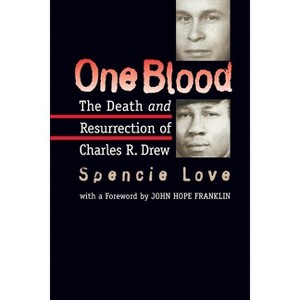
One Blood - 2nd Edition by Spencie Love (Paperback)
In Stock
Sponsored
About this item
Highlights
- One Blood traces both the life of the famous black surgeon and blood plasma pioneer Dr. Charles Drew and the well-known legend about his death.
- About the Author: A former journalist, Spencie Love received her Ph.D. in American history from Duke University and has taught at Duke and at the University of Oregon.
- 400 Pages
- Biography + Autobiography, Medical (incl. Patients)
Description
About the Book
On April 1, 1950, famous black surgeon and blood plasma pioneer Dr. Charles Drew bled to death after an auto accident, when he was refused treatment at a whites-only hospital. Although Drew was in fact treated in the emergency room in a small, segregated hospital, Love shows that in a generic sense, the claims surrounding his death are true. This book traces the life and well-known legend of Drew, revealing how truth becomes myth in a segregated society. 36 illustrations. Map.
Book Synopsis
One Blood traces both the life of the famous black surgeon and blood plasma pioneer Dr. Charles Drew and the well-known legend about his death. On April 1, 1950, Drew died after an auto accident in rural North Carolina. Within hours, rumors spread: the man who helped create the first American Red Cross blood bank had bled to death because a whites-only hospital refused to treat him. Drew was in fact treated in the emergency room of the small, segregated Alamance General Hospital. Two white surgeons worked hard to save him, but he died after about an hour. In her compelling chronicle of Drew's life and death, Spencie Love shows that in a generic sense, the Drew legend is true: throughout the segregated era, African Americans were turned away at hospital doors, either because the hospitals were whites-only or because the 'black beds' were full. Love describes the fate of a young black World War II veteran who died after being turned away from Duke Hospital following an auto accident that occurred in the same year and the same county as Drew's. African Americans are shown to have figuratively 'bled to death' at white hands from the time they were first brought to this country as slaves. By preserving their own stories, Love says, they have proven the enduring value of oral history. General Interest/Race Relations
Review Quotes
"One Blood is much more than a biography of Charles Drew. Through extensive research and interviews, Love has provided an excellent analysis of the recent history of black medical care in America. Highly recommended for academic and public libraries." -- Library Journal
"One Blood will rank alongside the seminal writings of William E. B. DuBois, James Baldwin, E. Franklin Frazier, Ralph Ellison, and John Hope Franklin. . . . With due respect to prior research efforts on the life and post mortem of Charles Drew, this work is the most thorough, penetrating, and revealing to date." -- Journal of the American Medical Association
"[Love] lets the facts spoil a good story in order to tell a much better one." -- Washington Post
"A well-written and extensively researched book, One Blood is replete with new and exciting insights about Drew and the African American experience and should interest both the specialist and general reader." -- Journal of Southwest Georgia History
"Fascinating. . . . The result of Love's effort is an object lesson in the nature of historical facts and in the ways popular perceptions color historical understandings. . . . The book is well worth the read." -- Journal of American History
"Provocative and humbling social history." -- Atlanta Journal-Constitution
"Spencie Love has written a moving and important book on race relations in America. . . . Dr. Drew, in life and death, also bore witness to a more humane and, the author hopes, a more powerful truth: that in the end all of us are truly of 'one blood.' Her superb book may carry us a step or two closer to a recognition of that indisputable fact." -- Charles B. Dew, New York Times Book Review
"This extremely interesting book tells the story of Drew, the African American medical scientist who developed the means of giving blood transfusions. . . . This book will interest southern historians, historians of the South, and medical historians, as well as a wide variety of readers." -- CHOICE
"With skillful hands, Spencie Love weaves together an array of interdisciplinary evidence and theory to produce an intriguing meditation on the meaning of myth and the role it plays in revealing and perpetuating deeper truths." -- Civilization
About the Author
A former journalist, Spencie Love received her Ph.D. in American history from Duke University and has taught at Duke and at the University of Oregon.
Shipping details
Return details
Frequently bought together





Trending Non-Fiction





Discover more options