Sponsored
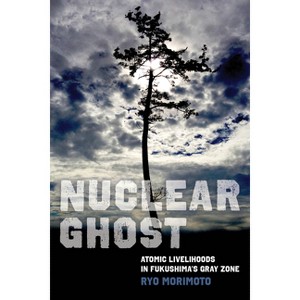
Nuclear Ghost - (California Public Anthropology) by Ryo Morimoto (Hardcover)
In Stock
Sponsored
About this item
Highlights
- "There is a nuclear ghost in Minamisōma.
- About the Author: Ryo Morimoto is a first-generation college student and scholar from Japan and Assistant Professor of Anthropology at Harvard University.
- 356 Pages
- Social Science, Anthropology
- Series Name: California Public Anthropology
Description
About the Book
"'There is a nuclear ghost in Minamisåoma,' explained an elderly local who had a mysterious experiencing following the 2011 nuclear disaster in coastal Fukushima. In his highly original book, Ryo Morimoto explores the nuclear ghost that lives among the graying population that remained in the contaminated region after the fallout. Encountering radiation's shape-shifting effects on residents' livelihoods, nonhuman others, and local ecologies at the edges of evacuation zones, Morimoto asks: what happens if the state authority, scientific experts, and the public dispute over the extent, threshold, and nature of the harm from the accident? As one of the first in-depth ethnographic accounts of life after Fukushima in English, Nuclear Ghost offers dazzling stories from a diverse group of residents who aspire to live and die well in their now irradiated homes, offering a compelling case for reimaging relationality and accountability in the ever-atomizing world"
Book Synopsis
"There is a nuclear ghost in Minamisōma." This is how one resident describes a mysterious experience following the 2011 nuclear fallout in coastal Fukushima. Investigating the nuclear ghost among the graying population, Ryo Morimoto encounters radiation's shapeshifting effects. What happens if state authorities, scientific experts, and the public disagree about the extent and nature of the harm caused by the accident? In one of the first in-depth ethnographic accounts of coastal Fukushima written in English, Nuclear Ghost tells the stories of a diverse group of residents who aspire to live and die well in their now irradiated homes. Their determination to recover their land, cultures, and histories for future generations provides a compelling case study for reimagining relationality and accountability in the ever-atomizing world.
From the Back Cover
"Nuclear ghosts dwell among the enlightened elders of Minamisōma-- as the afterlife of atomic power, as the decay of disaster, as the half life of sociality, and as the dogged persistence of hope. An ethnographer of rare perception, Morimoto sees it all. This exceptional book renders this community's experiences with sterling insight and tender clarity. An unforgettable, indispensable debut." --Alondra Nelson, Harold F. Linder Professor, Institute for Advanced Study
"Ryo Morimoto's unparalleled, compassionate gaze in Nuclear Ghost brings us deep into the liminal zone of evacuated, post-cataclysm Minamisōma. Ghosts are many--unseen radioactivity, lost friends and livelihood, stigma--haunting citizens striving to live beyond victimhood. Morimoto vividly captures their lifeworld. To understand post-disaster Fukushima, you must read this book."--Peter Galison, Joseph Pellegrino University Professor, Harvard University
"Ryo Morimoto applies an Indigenous studies perspective in this brilliant, must-read work about disaster's consequences. Insightfully illuminating how science dehumanizes survivors, he masterfully dignifies Fukushima's residents as they navigate uncertainty and bravely rebuild their lives."--Valerie Lambert, Choctaw Nation, author of Native Agency: Indians in the Bureau of Indian Affairs
Review Quotes
"Morimoto's work is commendable for the deep care he takes for his interlocutors and the painstaking thoroughness of his fieldwork, which are so clearly evident throughout his ethnography. Moreover, the intellectual breadth of Morimoto's scholarship is admirable."-- "American Ethnologist"
About the Author
Ryo Morimoto is a first-generation college student and scholar from Japan and Assistant Professor of Anthropology at Harvard University. His scholarly work addresses the planetary impacts of our past and present engagements with nuclear things.
Shipping details
Return details



Trending Non-Fiction






Discover more options