Sponsored
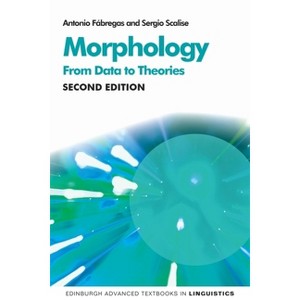
Morphology - (Edinburgh Advanced Textbooks in Linguistics) 2nd Edition by Antonio Fábregas & Sergio Scalise (Paperback)
In Stock
Sponsored
About this item
Highlights
- This textbook provides an in-depth introduction to morphology, while also engaging with the latest research and developments in the field.
- Author(s): Antonio Fábregas & Sergio Scalise
- 272 Pages
- Language + Art + Disciplines, Language Arts
- Series Name: Edinburgh Advanced Textbooks in Linguistics
Description
About the Book
A comprehensive guide to the latest developments in morphology
Book Synopsis
This textbook provides an in-depth introduction to morphology, while also engaging with the latest research and developments in the field. By presenting the latest theories and highlighting the current challenges in morphology, it offers a firm grounding for starting your own original research and will inspire your own thinking about the morphology of your target languages. It guides you through the context, theories and latest research in morphology with end-of-chapter exercises designed to strengthen your understanding of key topics and suggestions for further reading offered as a starting point for further study.
This second edition incorporates the latest research within morphology, drawing on new research from the fields of psycholinguistics and language acquisition and discussing morphology in relation to syntax, lexical semantics and phonology. It also pays particular attention to the debate between lexicalism and constructionism. With two new chapters on morphology and language acquisition and morphology and psycholinguistics and updated accounts of the claims made within each theory to reflect current research trends, there is so much here to invigorate and inspire your study of morphology.
Review Quotes
Intended for advanced undergraduates and graduate students, this new edition of Fabregas and Scalise is an excellent introduction to morphological theory as it has developed over the last four decades. The text offers a comprehensive and well-balanced overview of issues concerning derivation, inflection, and compounding, and new chapters on psycholinguistics and language acquisition.--Rochelle Lieber, University of New Hampshire
Shipping details
Return details
Trending Non-Fiction






Discover more options