Sponsored
In Stock
Sponsored
About this item
Highlights
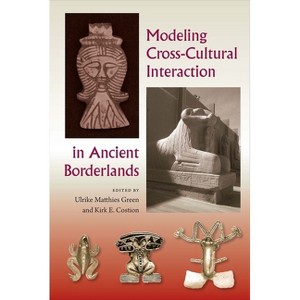
- This volume introduces the Cross-Cultural Interaction Model (CCIM), a visual tool for studying the exchanges that take place between different cultures in borderland areas or across long distances.
- About the Author: Ulrike Matthies Green is instructor in the department of anthropology at Orange Coast College.
- 226 Pages
- Social Science, Archaeology
Description
About the Book
This book introduces the Cross Cultural Interaction Model (CCIM) as a tool to visually display and organize the inherent complexity of the social, economic, and political interactions that take place in multicultural borderlands or across long distances.
Book Synopsis
This volume introduces the Cross-Cultural Interaction Model (CCIM), a visual tool for studying the exchanges that take place between different cultures in borderland areas or across long distances. The model helps researchers untangle complex webs of connections among people, landscapes, and artifacts, and can be used to support multiple theoretical viewpoints.
Through case studies, contributors apply the CCIM to various regions and time periods, including Roman Europe, the Greek province of Thessaly in the Late Bronze Age, the ancient Egyptian-Nubian frontier, colonial Greenland in the eighteenth and nineteenth centuries, the Mississippian realm of Cahokia, ancient Costa Rica and Panama, and the Moquegua Valley of Peru in the early Middle Horizon period. They adapt the model to best represent their data, successfully plotting connections in many different dimensions, including geography, material culture, religion and spirituality, and ideology. The model enables them to expose what motivates people to participate in cultural exchange, as well as the influences that people reject in these interactions.
These results demonstrate the versatility and analytical power of the CCIM. Bridging the gap between theory and data, this tool can prompt users to rethink previous interpretations of their research, leading to new ideas, new theories, and new directions for future study.
Contributors: Meghan E. Buchanan Michele R. Buzon Kirk Costion Bryan Feuer Ulrike Matthies Green Scott Palumbo Stuart Tyson Smith Peter Andreas Toft Peter S. WellsReview Quotes
"A novel approach to depicting archaeological relationships."--Antiquity
About the Author
Ulrike Matthies Green is instructor in the department of anthropology at Orange Coast College. Kirk E. Costion is a residential faculty member specializing in anthropological archaeology in the Cultural Science department at Mesa Community College.
Shipping details
Return details
Trending Non-Fiction