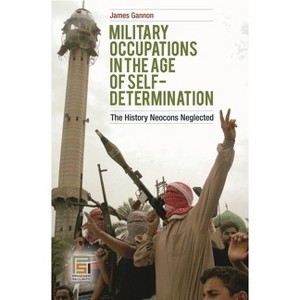
This book offers a perspective decidedly different from that of the Bush Administration and its neoconservative supporters.
About the Author: James Gannon is a journalist who spent twenty years as a writer, producer, and director at NBC News.
216 Pages
History, Military
Series Name: Praeger Security International
Description
About the Book
This book offers a perspective decidedly different from that of the Bush Administration and its neoconservative supporters. Since the United Nations embraced the right of national self-determination in 1945, the historical odds have been unfavorable to great powers that impose military occupations on smaller nations. This point is bolstered by the evidence from history, and is particularly pertinent to the American occupation of Iraq, where a robust insurgency has delayed projected successes by the administration and wartime planners. Drawing on historical antecedents to the occupation of Iraq, Gannon examines events such as the British Struggles in Palestine, French enterprises in Algeria, the Soviet debacle in Afghanistan, and other instances in which occupying powers to demonstrate the struggles and failures of occupying powers in the face of determined insurgencies.
Since the United Nations adopted the principle of national self-determination in 1945, great powers like the United States that occupy smaller nations like Iraq lose more often than not when confronted with credible insurgencies. The evidence is taken from recent history: the Zionist victory over Britain in Palestine, and the defeats of France in Algeria, America in Vietnam, the Soviet Union in Afghanistan, and Israel in Lebanon. On the surface these outcomes seem perverse-powerful modern armies brought down by rag-tag rebels. The explanation comes from the types of warfare fought. Great powers are equipped to fight other great powers in great battles over large territory. Rebels fight shadow wars, neutralizing the fire power and mobility of the occupying army. Insurgencies continue for years, allowing political considerations to come into play, including propaganda, international pressure, and the stream of dead and wounded returning from the war zone. The home front turns against the war, and new policymakers conclude that the nation's interests are best served by getting out. History is not an exact science, so the judgment here is expressed in probability, not certainty; witness the British defeat of insurgencies in Malaya and Kenya before giving up these colonies, and the four-decades-old Israeli occupation and partial colonization of the West Bank.
Book Synopsis
This book offers a perspective decidedly different from that of the Bush Administration and its neoconservative supporters. Since the United Nations embraced the right of national self-determination in 1945, the historical odds have been unfavorable to great powers that impose military occupations on smaller nations. This point is bolstered by the evidence from history, and is particularly pertinent to the American occupation of Iraq, where a robust insurgency has delayed projected successes by the administration and wartime planners. Drawing on historical antecedents to the occupation of Iraq, Gannon examines events such as the British Struggles in Palestine, French enterprises in Algeria, the Soviet debacle in Afghanistan, and other instances in which occupying powers to demonstrate the struggles and failures of occupying powers in the face of determined insurgencies.
Since the United Nations adopted the principle of national self-determination in 1945, great powers like the United States that occupy smaller nations like Iraq lose more often than not when confronted with credible insurgencies. The evidence is taken from recent history: the Zionist victory over Britain in Palestine, and the defeats of France in Algeria, America in Vietnam, the Soviet Union in Afghanistan, and Israel in Lebanon. On the surface these outcomes seem perverse-powerful modern armies brought down by rag-tag rebels. The explanation comes from the types of warfare fought. Great powers are equipped to fight other great powers in great battles over large territory. Rebels fight shadow wars, neutralizing the fire power and mobility of the occupying army. Insurgencies continue for years, allowing political considerations to come into play, including propaganda, international pressure, and the stream of dead and wounded returning from the war zone. The home front turns against the war, and new policymakers conclude that the nation's interests are best served by getting out. History is not an exact science, so the judgment here is expressed in probability, not certainty; witness the British defeat of insurgencies in Malaya and Kenya before giving up these colonies, and the four-decades-old Israeli occupation and partial colonization of the West Bank.
About the Author
James Gannon is a journalist who spent twenty years as a writer, producer, and director at NBC News. He produced documentaries in the early 1980s that won several awards. In retirement, he wrote Stealing Secrets, Telling Lies: How Spies and Codebreakers Helped Shape the Twentieth Century (2001).
Dimensions (Overall): 9.1 Inches (H) x 6.3 Inches (W) x .9 Inches (D)
Weight: .95 Pounds
Suggested Age: 22 Years and Up
Number of Pages: 216
Genre: History
Sub-Genre: Military
Series Title: Praeger Security International
Publisher: Praeger
Theme: General
Format: Hardcover
Author: James Gannon
Language: English
Street Date: July 1, 2008
TCIN: 1007907153
UPC: 9780313353826
Item Number (DPCI): 247-12-8596
Origin: Made in the USA or Imported
If the item details aren’t accurate or complete, we want to know about it.
Shipping details
Estimated ship dimensions: 0.9 inches length x 6.3 inches width x 9.1 inches height
Estimated ship weight: 0.95 pounds
We regret that this item cannot be shipped to PO Boxes.
This item cannot be shipped to the following locations: American Samoa (see also separate entry under AS), Guam (see also separate entry under GU), Northern Mariana Islands, Puerto Rico (see also separate entry under PR), United States Minor Outlying Islands, Virgin Islands, U.S., APO/FPO
Return details
This item can be returned to any Target store or Target.com.
This item must be returned within 90 days of the date it was purchased in store, shipped, delivered by a Shipt shopper, or made ready for pickup.