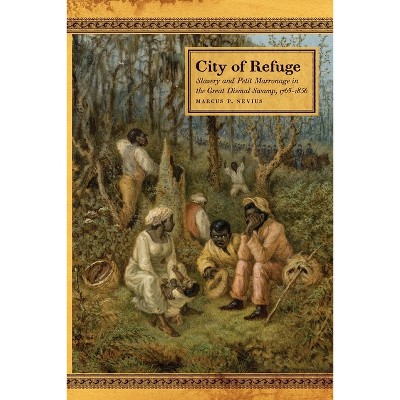
For more than four centuries, communities of maroons (men and women who escaped slavery) dotted the fringes of plantation America, from Brazil through the Caribbean to the United States.
About the Author: Richard Price (Author) RICHARD PRICE has written extensively on the history and culture of African Americans throughout the hemisphere.
200 Pages
History, Latin America
Series Name: Race in the Atlantic World, 1700-1900
Description
About the Book
"For more than four centuries, the communities of maroons (men and women who escaped from slavery) dotted the fringes of plantation America, from Brazil through the Caribbean to the United States. Today their descendants still form semi-independent enclaves-in Jamaica, Brazil, Colombia, Belize, Suriname, Guyane, and elsewhere-remaining proud of their maroon origins and, in some cases, faithful to unique cultural traditions forged during the earliest days of Afro-American history. In 1986, expelled by the military regime of Suriname, the Prices turned to neighboring Guyane (French Guiana), where thousands of Maroons were taking refuge from the Suriname civil war. Over the next fifteen years, their conversations with local people convinced them of the need to replace the pervasive stereotypes about Maroons in Guyane with accurate information. In 2003, Les Marrons became a local best-seller. In 2020, after many further visits, the Prices wrote a new edition taking into account the many rapid changes. Maroons in Guyane reviews the history of the four Maroon peoples in Guyane, explains how these groups differ from one another, and analyzes their current situations in the bustling, multicultural world of this far-flung outpost of the French Republic. A gallery of the magnificent arts of the Maroons completes the volume"--
Book Synopsis
For more than four centuries, communities of maroons (men and women who escaped slavery) dotted the fringes of plantation America, from Brazil through the Caribbean to the United States. Today their descendants still form semi-independent enclaves--in Jamaica, Brazil, Colombia, Belize, Suriname, Guyane, and elsewhere--remaining proud of their maroon origins and, in some cases, faithful to unique cultural traditions forged during the earliest days of Afro-American history.
In 1986, expelled by the military regime of Suriname, anthropologists Richard and Sally Price turned to neighboring Guyane (French Guiana), where thousands of Maroons were taking refuge from the Suriname civil war. Over the next fifteen years, their conversations with local people convinced them of the need to replace the pervasive stereotypes about Maroons in Guyane with accurate information. In 2003, Les Marrons became a local best seller. In 2020, after a series of further visits, the Prices wrote a new edition taking into account the many rapid changes.
Available for the first time in English, Maroons in Guyane reviews the history of Maroon peoples in Guyane, explains how these groups differ from one another, and analyzes their current situations in the bustling, multicultural world of this far-flung outpost of the French Republic. A gallery of the magnificent arts of the Maroons completes the volume.
Review Quotes
Based on decades of research, Maroons in Guyane pays close attention to Maroon communities on their own terms--from African customs that survived the Middle Passage to ecological principles undergirding Maroon life--while also illuminating the wider world of Marronage and thus Black resistance throughout Atlantic society. It is a wonderful and ramifying book.--Richard S. Newman "author of Abolitionism: A Very Short Introduction"
About the Author
Richard Price (Author) RICHARD PRICE has written extensively on the history and culture of African Americans throughout the hemisphere. His prize-winning books include First-Time, Alabi's World, The Convict and the Colonel, Travels with Tooy, and Rainforest Warriors. He is the coauthor, with Sally Price, of Saamaka Dreaming. He lives on Coquina Key, Florida.
Sally Price (Author) Sally Price is the author of Co-wives and Calabashes, Primitive Art in Civilized Places and Paris Primitive: Jacques Chirac's Museum on the Quai Branly. She is the coauthor of Saamaka Dreaming.
Dimensions (Overall): 9.2 Inches (H) x 6.1 Inches (W) x .85 Inches (D)
Weight: .83 Pounds
Suggested Age: 22 Years and Up
Number of Pages: 200
Genre: History
Sub-Genre: Latin America
Series Title: Race in the Atlantic World, 1700-1900
Publisher: University of Georgia Press
Theme: South America
Format: Paperback
Author: Richard Price & Sally Price
Language: English
Street Date: June 15, 2022
TCIN: 88966956
UPC: 9780820360867
Item Number (DPCI): 247-15-6957
Origin: Made in the USA or Imported
If the item details aren’t accurate or complete, we want to know about it.
Shipping details
Estimated ship dimensions: 0.85 inches length x 6.1 inches width x 9.2 inches height
Estimated ship weight: 0.83 pounds
We regret that this item cannot be shipped to PO Boxes.
This item cannot be shipped to the following locations: American Samoa (see also separate entry under AS), Guam (see also separate entry under GU), Northern Mariana Islands, Puerto Rico (see also separate entry under PR), United States Minor Outlying Islands, Virgin Islands, U.S., APO/FPO
Return details
This item can be returned to any Target store or Target.com.
This item must be returned within 90 days of the date it was purchased in store, shipped, delivered by a Shipt shopper, or made ready for pickup.