Sponsored
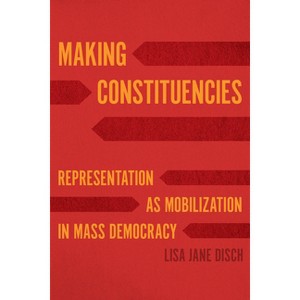
Making Constituencies - by Lisa Jane Disch (Paperback)
In Stock
Sponsored
About this item
Highlights
- Public division is not new; in fact, it is the lifeblood of politics, and political representatives have constructed divisions throughout history to mobilize constituencies.
- About the Author: Lisa Jane Disch is professor of political science at the University of Michigan.
- 208 Pages
- Political Science, American Government
Description
About the Book
Since the turn of the twenty-first century, the idea of a divided United States has become commonplace. In the wake of the 2020 election, some commentators warned that the American public was the most divided it has been since the Civil War. Political scientists, political theorists, and public intellectuals have suggested that uninformed, misinformed, and disinformed voters are at the root of this division. Some are simply unwilling to accept facts or science, which makes them easy targets for elite manipulation. It also creates a grass-roots political culture that discourages cross-partisan collaboration in Washington.
Yet, manipulation of voters is not as grave a threat to democracy in America as many scholars and pundits make it out to be. The greater threat comes from a picture that partisans use to rally their supporters: that of an America sorted into opposing camps so deeply rooted that they cannot be shaken loose and remade. Making Constituencies proposes a new theory of representation as mobilization to argue that divisions like these are not inherent in society, but created, and political representatives of all kinds forge and deploy them to cultivate constituencies.
Book Synopsis
Public division is not new; in fact, it is the lifeblood of politics, and political representatives have constructed divisions throughout history to mobilize constituencies.
Since the turn of the twenty-first century, the idea of a divided United States has become commonplace. In the wake of the 2020 election, some commentators warned that the American public was the most divided it has been since the Civil War. Political scientists, political theorists, and public intellectuals have suggested that uninformed, misinformed, and disinformed voters are at the root of this division. Some are simply unwilling to accept facts or science, which makes them easy targets for elite manipulation. It also creates a grass-roots political culture that discourages cross-partisan collaboration in Washington.
Yet, manipulation of voters is not as grave a threat to democracy in America as many scholars and pundits make it out to be. The greater threat comes from a picture that partisans use to rally their supporters: that of an America sorted into opposing camps so deeply rooted that they cannot be shaken loose and remade. Making Constituencies proposes a new theory of representation as mobilization to argue that divisions like these are not inherent in society, but created, and political representatives of all kinds forge and deploy them to cultivate constituencies.
Review Quotes
"Making Constituencies is about questions that are both timeless and very recent. Disch's concern for who comes first, the representative or the represented, is at least as old as the French Revolution. As she states towards the end of the book, 1789 is a watershed for the history of representative democracy and for theorists reflecting on the possibilities and limits of representation as a tool of modern politics... In arguing that competence ought not to be the measure against which to evaluate the health of contemporary democratic politics, Disch convincingly deflates common concerns for voters' manipulation and the elitist and pessimistic attitudes that come with them."-- "The Review of Politics"
About the Author
Lisa Jane Disch is professor of political science at the University of Michigan. She has published four books. Most recently, she coedited The Oxford Handbook of Feminist Theory and The Constructivist Turn in Political Representation.
Shipping details
Return details
Frequently bought together

Trending Non-Fiction





Discover more options