Sponsored
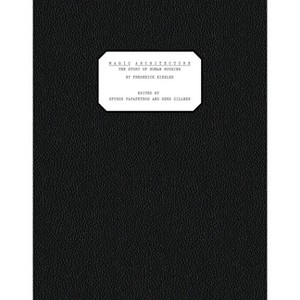
Magic Architecture - by Frederick Kiesler (Hardcover)
In Stock
Sponsored
About this item
Highlights
- The first publication of artist and architect Frederick Kiesler's epoch-spanning history of human architecture, largely unknown but still relevant.
- About the Author: Frederick Kiesler (1890-1965) was an Austrian-born American artist, architect, set designer, and sculptor best known for his exhibition installations and visionary architectural projects, including an experimental model of human habitation titled The Endless House.
- 400 Pages
- Architecture, History
Description
About the Book
"A first-ever publication of Frederick Kiesler's manifesto from 1945, transcribed and annotated, accompanied with original illustrations and introduced with an essay by Spyros Papapetros"--
Book Synopsis
The first publication of artist and architect Frederick Kiesler's epoch-spanning history of human architecture, largely unknown but still relevant.
Magic Architecture was the architect Frederick Kiesler's most ambitious book project, an epoch-spanning history of human housing from prehistory to the atomic era, submitted to editors after World War II but left unpublished. In its holistic view of habitation through the lens of anthropology, ecology, and the life sciences, Magic Architecture is one of the most extraordinary texts on architecture written in the twentieth century, now at last published in the twenty-first. Kiesler's exploration of the effects of modern technology in combination with the alternative epistemology of "magical" practices associated with cave drawings and the first artifacts of human industry reflects his profoundly interdisciplinary perspective on the development of art, architecture, and design.
This critical edition preserves Kiesler's conception of the book as a neo-Vitruvian treatise divided into ten parts that narrate an alternative history and theory of architecture. Also included are more than seventy composite plate illustrations consisting of images cut and pasted from books and popular science journals, with elaborate captions, as well as Kiesler's own line drawings made specifically for this project. The editors have reassembled the book's text and illustrations from archival documents, supplementing them with notes that trace the copious development of the work. Introductory essays provide an interpretation of key themes and bibliographic sources, as well as a chronological context of the architect's research. Appendixes offer additional textual and visual material gathered by Kiesler for the project.
About the Author
Frederick Kiesler (1890-1965) was an Austrian-born American artist, architect, set designer, and sculptor best known for his exhibition installations and visionary architectural projects, including an experimental model of human habitation titled The Endless House.
Spyros Papapetros is Associate Professor of Art and Architectural Theory and Historiography at Princeton University. His many publications include On the Animation of the Inorganic: Art, Architecture, and the Extension of Life and the edited volume Retracing the Expanded Field: Encounters between Art and Architecture (MIT Press, 2014).
Gerd Zillner is Director of the Frederick and Lillian Kiesler Private Foundation, Vienna. He has curated numerous exhibitions on Kiesler and coedited the volumes Frederick Kiesler: Face to Face with the Avant-Garde and Friedrich Kiesler: Architekt, Künstler, Visionär.