Sponsored
Pre-order
Sponsored
About this item
Highlights
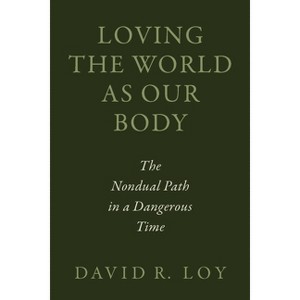
- Acclaimed author David Loy explores what has gone wrong with humanity and how we can fix it.
- About the Author: David R. Loy began Zen practice in Hawaii in 1971 with Yamada Koun and Robert Aitken, and continued with Koun Roshi in Japan, where he lived for almost twenty years.
- 256 Pages
- Religion + Beliefs, Comparative Religion
Description
Book Synopsis
Acclaimed author David Loy explores what has gone wrong with humanity and how we can fix it.
Humanity's survival instincts worked great back when humans were few, primitive, and had to fight against the entirety of nature to survive. But those same instincts proved disastrous once humans began to organize themselves into complex societies. How did we manage? We developed moral and ethical frameworks that kept societies functioning for centuries.
But now, in the modern era, those frameworks again have proven unsatisfactory--rigid, inflexible, and often unable to accommodate new information and ideas. So some of us have turned to secularism and scientific progress, which have resulted in awesome technologies--many of which improve our lives immensely, but some of which threaten our existence.
E. O. Wilson sums up our quandary: "The real problem of humanity is that we have Paleolithic emotions, medieval institutions, and god-like technology." Where do we go from here?
David Loy describes how today we are left with three primary worldviews competing for our allegiance.
The first has the most adherents and includes traditional religious versions of cosmological dualism, including the promise (or threat) of individual post mortem salvation (or damnation).
The second is secularism, supported by the physical sciences and offering a naturalistic understanding of the world that does not support any spiritual or afterlife transcendence.
The third worldview regards the earth and its creatures as sacred, without the need for a "higher reality" to have created them. Humanity is one of the manifestations of a self-organizing cosmos that, according to some versions, is evolving to become more self-aware. According to this nondualist paradigm, everything is a manifestation of the sacred, which we can experience when we wake up from the delusion of being a separate self in an objectified world.
This third view is our way out of the quandary, and Loy shows readers how this nondualist view has actually been with us longer than we think: within the more esoteric views woven through and among a wide variety of otherwise traditional religious traditions.
Table of Contents
Introduction
What We Can Learn from Our Evolution
An Inevitable Certainty
Sexuality
Beyond Freedom and Determinism
How to Be an Ape
Altruism and Tribalism
Self-Domestication
Civilization
Religion
Why Our Evolutionary Psychology Matters Today
What We Could Have Learned from Our Religions
The Axial Age
Script/ure
Transcendence
The Birth of the Axial Age
The Good, the Bad, and the Ugly
Why This Matters
What We Need Today
Shamanism
Judaism
Christianity
Islam
Vedanta
Buddhism
China
Waking Up to the Dream
Conclusion
Touching the Earth
Notes
Index
About the Author
Review Quotes
"In this tour de force, David Loy delves deeply into evolutionary psychology and the emergence of Axial Age religions to illuminate key causes of the crises currently impacting humanity. Readers will especially appreciate how he delineates the ecological costs of those religions' dualisms--between now and the afterlife, between nature and a transcendent ultimate reality--while also lifting up nondualistic perspectives in those traditions that can support us in identifying with, loving, and protecting our world."--Christopher Ives, author of Zen Ecology
About the Author
David R. Loy began Zen practice in Hawaii in 1971 with Yamada Koun and Robert Aitken, and continued with Koun Roshi in Japan, where he lived for almost twenty years. He was authorized to teach in 1988 and has led retreats and workshops at Mountain Cloud Zen Center, Barre Center for Buddhist Studies, Omega Institute, Spirit Rock Meditation Center, Centro Kushi Ling in Italy, Ecodharma Centre in Spain, Terre d'Eveil in Paris, Gaia House Retreat Center in the UK, Dharma Gate Buddhist College in Budapest, and various Centro de Estudos Budistas Bodisatva Centers in Brazil, among others.
In 2014 David received an honorary PhD from his alma mater, Carleton College, for his years of work on socially engaged Buddhism. In 2016 he returned the degree, to protest the decision of the board of trustees not to divest from fossil fuel companies.
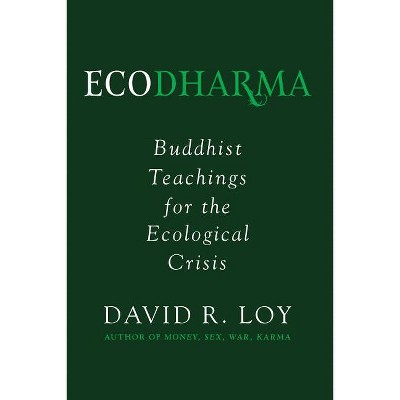
David's books and articles have been translated into many languages. Recent books include A New Buddhist Path and Ecodharma: Buddhist Teachings for the Ecological Crisis. He is one of the founders of the Rocky Mountain Ecodharma Retreat Center in Colorado. David's writings, podcasts, and videos are available at www.davidloy.org.
Shipping details
Return details
Trending Non-Fiction






Discover more options