Sponsored
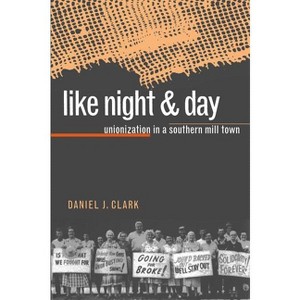
Like Night and Day - by Daniel J Clark Paperback
In Stock
Sponsored
About this item
Highlights
- Daniel Clark demonstrates the dramatic impact unionization made on the lives of textile workers in Henderson, North Carolina, in the decade after World War II.
- About the Author: Daniel J. Clark is assistant professor of history at Oakland University in Michigan.
- 272 Pages
- Political Science, Labor & Industrial Relations
Description
About the Book
Like Night and Day: Unionization in a Southern Mill Town
Book Synopsis
Daniel Clark demonstrates the dramatic impact unionization made on the lives of textile workers in Henderson, North Carolina, in the decade after World War II. Focusing on the Harriet and Henderson Cotton Mills, he shows that workers valued the Textile Workers Union of America for more than the higher wages and improved benefits it secured for them. Specifically, Clark points to the importance members placed on union-instituted grievance and arbitration procedures, which most labor historians have seen as impediments rather than improvements.
From the signing of contracts in 1943 until a devastating strike fifteen years later, the union gave local workers the tools they needed to secure at least some measure of workplace autonomy and respect from their employer. Union-instituted grievance procedures were not without flaws, says Clark, but they were the linchpin of these efforts. When arbitration and grievance agreements collapsed in 1958, the result was the strike that ultimately broke the union. Based on complete access to company archives and transcripts of grievance hearings, this case study recasts our understanding of labor-management relations in the postwar South.
From the Back Cover
Focusing on the Harriet and Henderson Cotton Mills, this book shows that workers valued the Textile Workers Union of America for more than the higher wages and improved benefits it secured for them. Specifically, Clark points to the importance members placed on union-instituted grievance and arbitration procedures, which most labor historians have previously seen as impediments rather than improvements.
Review Quotes
"Clark's use of details provides a sense of immediacy that makes his work a lively presentation that reads in places like a novel."--South Carolina Review
"One of the best available accounts of workplace conflict over the hated 'stretch-out.'"Reviews in American History
"Drawing on plant records that rarely become available, Clark reconstructs in extraordinary detail a system of workplace representation that protected workers from the worst excesses of speedup and arbitrary treatment. And he provides an exceptionally interesting explanation of why management turned against that system and, in 1958, broke the union. . . . No one concerned about industrial justice can truly comprehend this struggle without entering the shop-floor world that Clark reveals to us in this fine book."--David Brody, University of California, Davis
About the Author
Daniel J. Clark is assistant professor of history at Oakland University in Michigan.
Shipping details
Return details
Trending Non-Fiction






Discover more options