Sponsored
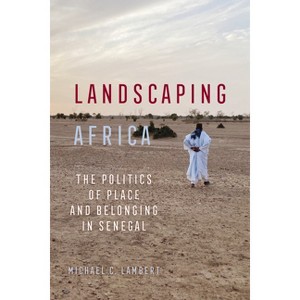
Landscaping Africa - by Michael C Lambert
Pre-order
Sponsored
About this item
Highlights
- How has European imperialism (re)made the world?
- About the Author: Michael C. Lambert is Professor Emeritus of African Studies, Anthropology, and Global Indigeneity at the University of North Carolina at Chapel Hill and author of Longing for Exile and Up from These Hills.
- 250 Pages
- History, Africa
Description
About the Book
"How has European imperialism (re)made the world? How can we understand this long process and its consequences in ways that capture both the materiality and the subjectivity of political domination? Inspired by Frantz Fanon's insight that colonization entails the (re)crafting of geographic space, Landscaping Africa develops the concept of "landscaping" to explore the enduring global impact of European imperialism. Written by an Indigenous anthropologist, this book also demonstrates how Indigenous peoples, in Africa and beyond, are building upon and tearing apart European colonial projects. Michael C. Lambert probes three cases of landscaping involving the West African nation of Senegal: the forging of an international border between Senegal and Mauritania, the imposition of rural-urban distinctions, and the deployment of immigration policy to divide the Global North and South. This book illuminates how borders and boundaries are made, and made meaningful, through domination, resistance, and struggles over belonging"-- Provided by publisher.
Book Synopsis
How has European imperialism (re)made the world? How can we understand this long process and its consequences in ways that capture both the materiality and the subjectivity of political domination? Inspired by Frantz Fanon's insight that colonization entails the (re)crafting of geographic space, Landscaping Africa develops the concept of "landscaping" to explore the enduring global impact of European imperialism. Written by an Indigenous anthropologist, this book also demonstrates how Indigenous peoples, in Africa and beyond, are building upon and tearing apart European colonial projects. Michael C. Lambert probes three cases of landscaping involving the West African nation of Senegal: the forging of an international border between Senegal and Mauritania, the imposition of rural-urban distinctions, and the deployment of immigration policy to divide the Global North and South. This book illuminates how borders and boundaries are made, and made meaningful, through domination, resistance, and struggles over belonging.
From the Back Cover
"In this profound and urgent contribution, Michael C. Lambert places African studies and Indigenous studies into generative conversation around the rhetorics, relations, and politics of land and belonging in West Africa and other colonized regions. Landscaping Africa is essential reading for scholars in both disciplines and offers a purposeful grounding for shared intellectual and political concern."--Daniel Heath Justice (Cherokee Nation), Professor of Critical Indigenous Studies and English, University of British Columbia
"Examines the transformative impact of European colonialism on African Indigenous conceptions of land, territoriality, and spatial boundaries. Drawing upon the author's engagement with Native American communities in the United States, to which he belongs, his service as a Peace Corps volunteer along the Mauritania-Senegal border, and his scholarly research on internal migration in southern Senegal, the book interrogates the complex dynamics through which colonial regimes appropriated, reconfigured, and redistributed land. In doing so, it illuminates the enduring consequences of these interventions for African societies, with particular attention to the Senegalese context."--Mamarame Seck, PhD, Institut Fondamental d'Afrique Noire and University Cheikh Anta Diop of Dakar
About the Author
Michael C. Lambert is Professor Emeritus of African Studies, Anthropology, and Global Indigeneity at the University of North Carolina at Chapel Hill and author of Longing for Exile and Up from These Hills. He is a citizen of the Eastern Band of Cherokee Indians.
Shipping details
Return details
Frequently bought together




Trending Non-Fiction






Discover more options